


RFP process template
Use a ready-made RFP template to define project requirements, compare vendors, and coordinate your teams from planning through final selection.
Sign up to use this template.
RFP process template
Use a ready-made RFP template to define project requirements, compare vendors, and coordinate your teams from planning through final selection.
Use templateSign up to use this template.
INTEGRATED FEATURES
Recommended apps




![[Old product ui] Request for proposal RFP template in Asana, spreadsheet-style project view (List)](https://assets.asana.biz/transform/14aa111b-ab22-483f-bfd1-3090acb7d2a5/RFP-process-premium-m?io=transform:fill,width:2560&format=webp)
Summary
When your team needs to find the right vendor for a project, a request for proposal (RFP) gives you a structured way to communicate your needs, compare options, and make a confident decision. But creating an RFP from scratch can be time-consuming, especially if you're not sure what to include or how to manage the process from start to finish.
That's where a free RFP template comes in. In this guide, you'll learn what an RFP is, when you should use one, what sections to include, and how to manage the full process. You'll also get practical tips for evaluating vendor responses and keeping your team aligned every step of the way.
What is an RFP?
A request for proposal (RFP) is a formal document that outlines the requirements for a project and invites qualified vendors to submit proposals for delivering it. Think of it as your way of saying, "Here's what we need, our budget, and our timeline, show us how you'd get it done." By structuring your needs in a single document, you can compare vendor approaches side by side and choose the best fit.
An RFP helps you:
Collect offers from different vendors so you can compare their skills and rates and choose the one that best meets your criteria
Outline your preferred scope and price so potential vendors know how and what to bid to win the work
Quickly evaluate the strengths and weaknesses of bidding vendors without spending a lot of time researching each company yourself
When to use an RFP template
Not every project requires an RFP. An RFP is most useful when the project is complex, you need to compare multiple vendors, or your organization requires a transparent selection process.
Consider issuing an RFP when:
The investment is high: The level of spend demands the best possible solution at the right price.
The solution isn't clear: You know the end goal but aren't sure what the best approach looks like.
You're switching vendors: You want a more thorough vetting process than the last time around.
Policy or regulations require it: Company procurement rules or government guidelines call for a formal solicitation.
You need to clarify your own needs: The act of drafting an RFP helps you better understand your project's specific requirements.
What's the difference between an RFP, RFI, and RFQ?
While all three documents help organizations gather information from vendors, each serves a different purpose.
RFI vs. RFQ vs. RFP
RFI: A request for information gathers general details about a supplier’s capabilities and services. Use it when you’re exploring the market and need to understand what’s available.
RFQ: A request for quote gathers detailed pricing for a specific good or service. Use it when your requirements are defined, and price is the main comparison factor.
RFP: A request for proposal asks vendors for comprehensive proposals that include approach, pricing, and timelines. Use it when you need vendors to propose solutions and want to compare more than cost.
A helpful way to remember: RFI explores, RFQ prices, RFP evaluates.
Free RFP process templateWhat to include in an RFP template
While your RFP will vary depending on the project, most effective documents share a common set of sections. Starting with a template helps ensure you cover all the essentials.
1. Company background
Start with a brief overview of your organization, including your industry, size, and mission. This gives vendors the context they need to tailor their proposals to your specific situation. Include any relevant details about your team structure or current tools that would help a vendor understand your working environment.
2. Project scope and goals
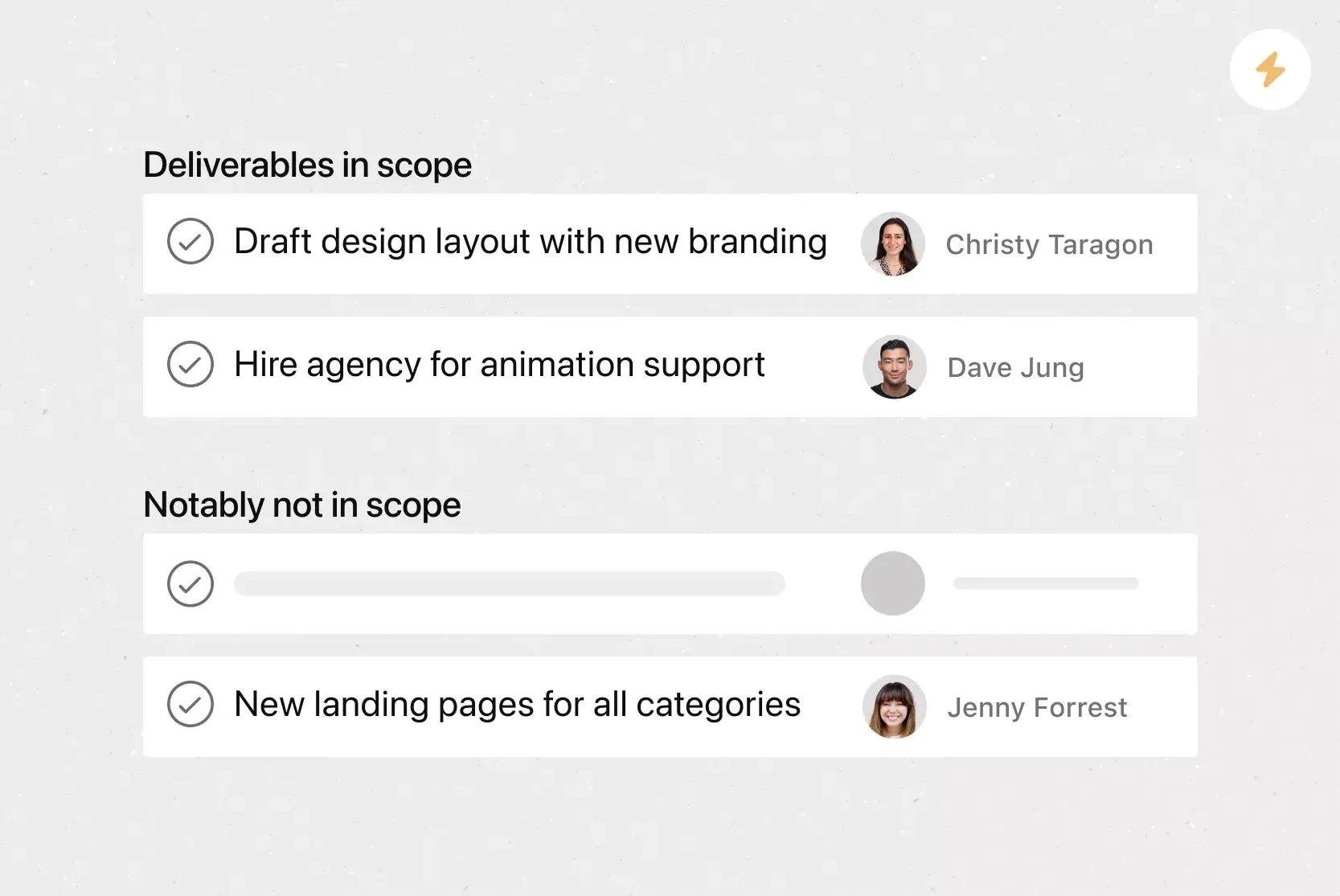
Clearly outline the project name and project scope, and identify specific goals and technical requirements. Be as specific as possible about what you need the vendor to deliver and what success looks like. The clearer you are here, the better the proposals you'll receive.
3. Budget
Include a realistic budget range for the project. Sharing your budget helps vendors propose solutions that are within your means and reduces back-and-forth later. You don't need to share an exact number, but providing a range helps vendors tailor their approach.
4. Timeline and milestones
Include a timeline that covers the proposal deadline, evaluation window, selection date, vendor notification date, and project completion date. Aim for concrete deadlines for each of these items. Be sure to outline any contingencies or obstacles that could affect the timeline.
5. Evaluation criteria
Evaluation criteria are the standards you'll use to score vendor proposals. Defining them upfront removes subjectivity and keeps your review process consistent. Spell out the factors that matter most, such as relevant experience, technical approach, cost, and references.
6. Submission guidelines
Define submission guidelines upfront, so your team can review and compare responses fairly. Specify proposal formats, deadlines, and delivery methods to maintain consistency throughout the process. Include details such as the maximum page length, required sections, and a point of contact for vendor questions.
Steps in the RFP process
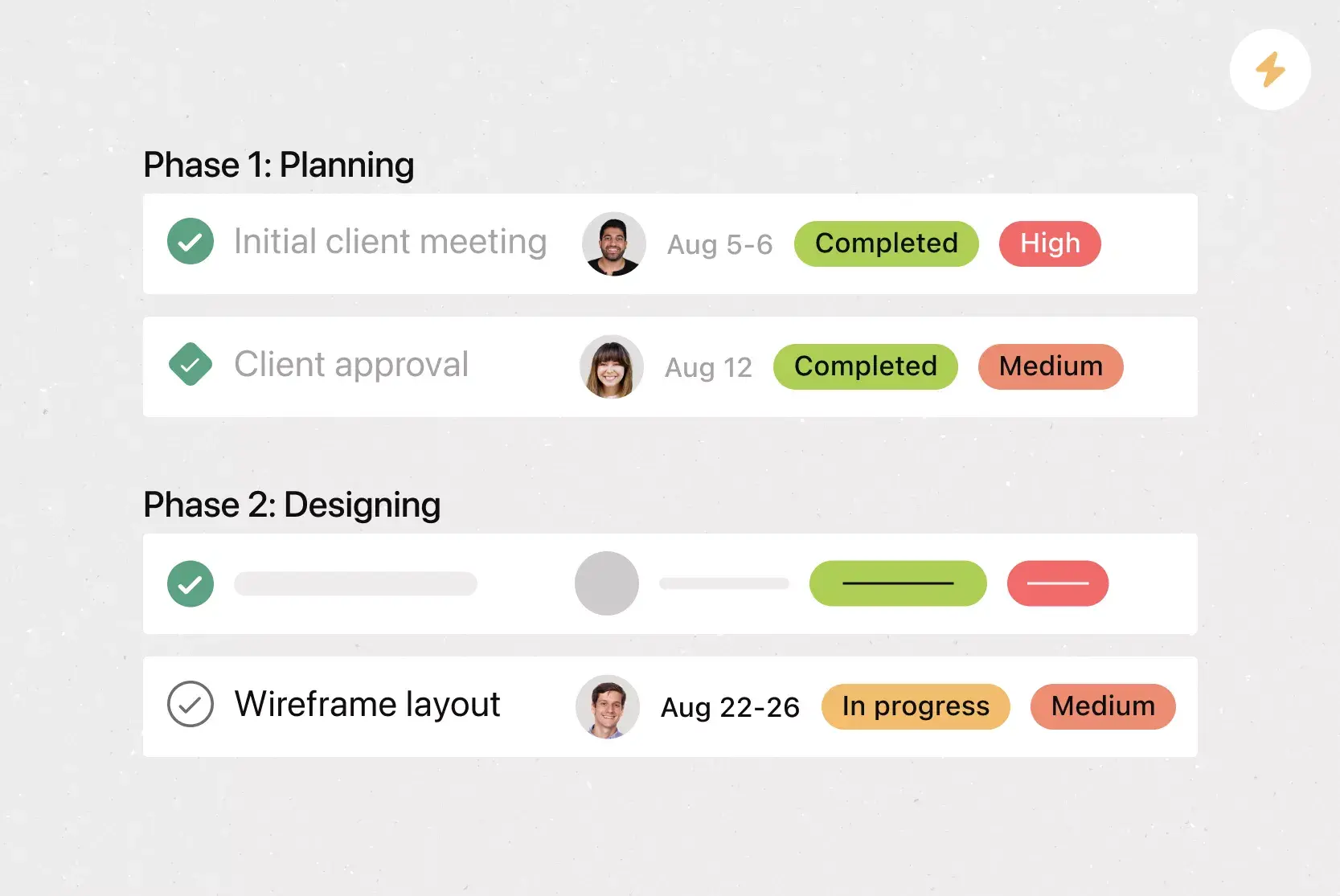
Once your organization has decided to issue an RFP, it's time to work through each phase. Although every organization has its own method, you can typically expect the process to follow these steps.
1. Discovery and planning
The first step in the RFP process is to conduct a discovery phase with key stakeholders. You're trying to discover three key things:
What would go into creating the RFP? Establish project boundaries and develop a realistic scope.
Who will manage the RFP process? These individuals should have both organizational and project-specific knowledge to draft a detailed RFP.
What could be affected by the purchasing decision? Consider how the decision might affect ongoing projects, your organizational budget, and your relationships with internal teams and other third-party vendors.
This is arguably the most important step in the RFP process. Alignment around your organization's needs and project goals is essential for requirements gathering and drafting complete and effective RFP requirements.
2. Draft and issue the RFP
Your RFP should be clear, compelling, and easy to respond to. Use the components outlined above to structure your document. Once your team has reviewed and approved the draft, distribute it to qualified vendors.
Choosing who receives your RFP is just as important as writing it. The more qualified vendors you invite, the more competitive your proposals are likely to be. Set realistic deadlines, as most vendors can respond within two weeks if they already know your business.
3. Score and shortlist proposals
The next step is to review the vendor proposals, compare them, and create a shortlist. It's crucial to engage stakeholders in this process to provide their perspective and expertise.
Before you begin scoring, gather your vendor proposals to review them for compliance to the submission and minimum requirements. Using the guidelines provided in your RFP, verify that vendors followed the submission instructions and responded to all required questions.
4. Select the vendor and finalize the contract
Once you've scored and shortlisted your top candidates, conduct follow-up conversations or presentations to clarify any remaining questions. From there:
Finalize your vendor selection based on proposal strength and project alignment.
Begin negotiations and contract proceedings with the chosen vendor.
Inform both successful and non-selected vendors of the outcome.
Don't forget the vendor debrief. Providing unsuccessful vendors with a summary of their scores (without revealing competitor data) helps maintain professional relationships and improves the quality of future bids.
How to evaluate RFP responses
Evaluating vendor proposals is one of the most important parts of the RFP process. A robust evaluation process ensures vendor selection is fair, transparent, and aligned with your goals. Here are some best practices:
Create a scoring matrix. List criteria on one axis and vendors on the other, allowing scorers to evaluate and compare options at a glance. A simple spreadsheet-based matrix can be tailored to be as simple or complex as needed.
Weigh your criteria. Not all criteria carry the same weight. Decide which areas matter most; often functionality, security, and vendor expertise outweigh cost, and assign values accordingly.
Share criteria with vendors. The more vendors know about your priorities, the stronger their proposals will be. Share your evaluation criteria and weightings upfront to build trust and get more relevant responses.
Hold a consensus session. After independent scoring, bring the evaluation team together to discuss scores, clarify reasoning, and resolve discrepancies. This collaborative step ensures the final decision reflects a well-rounded team judgment.
Tips for managing an RFP process with our template
Get feedback before sending. Get feedback from teammates to ensure your RFP is thorough, clear, and asks the right questions.
Make it simple for responders. Create a response form so responders provide you with all the information you need up front, in the right format, without the back-and-forth.
Save time with templates. Instead of reinventing the wheel, save time by using templates across the organization tailored to the types of RFPs you're sending out.
Manage actionable emails. Turn actionable emails with responders into Asana tasks with deadlines and context so you don't forget or lose track of important information in your inbox.
Streamline your RFP process with Asana
Managing an RFP process involves many moving parts, from gathering internal requirements to tracking vendor submissions and coordinating evaluations across your team. Asana helps you bring all of that into one place so nothing falls through the cracks.
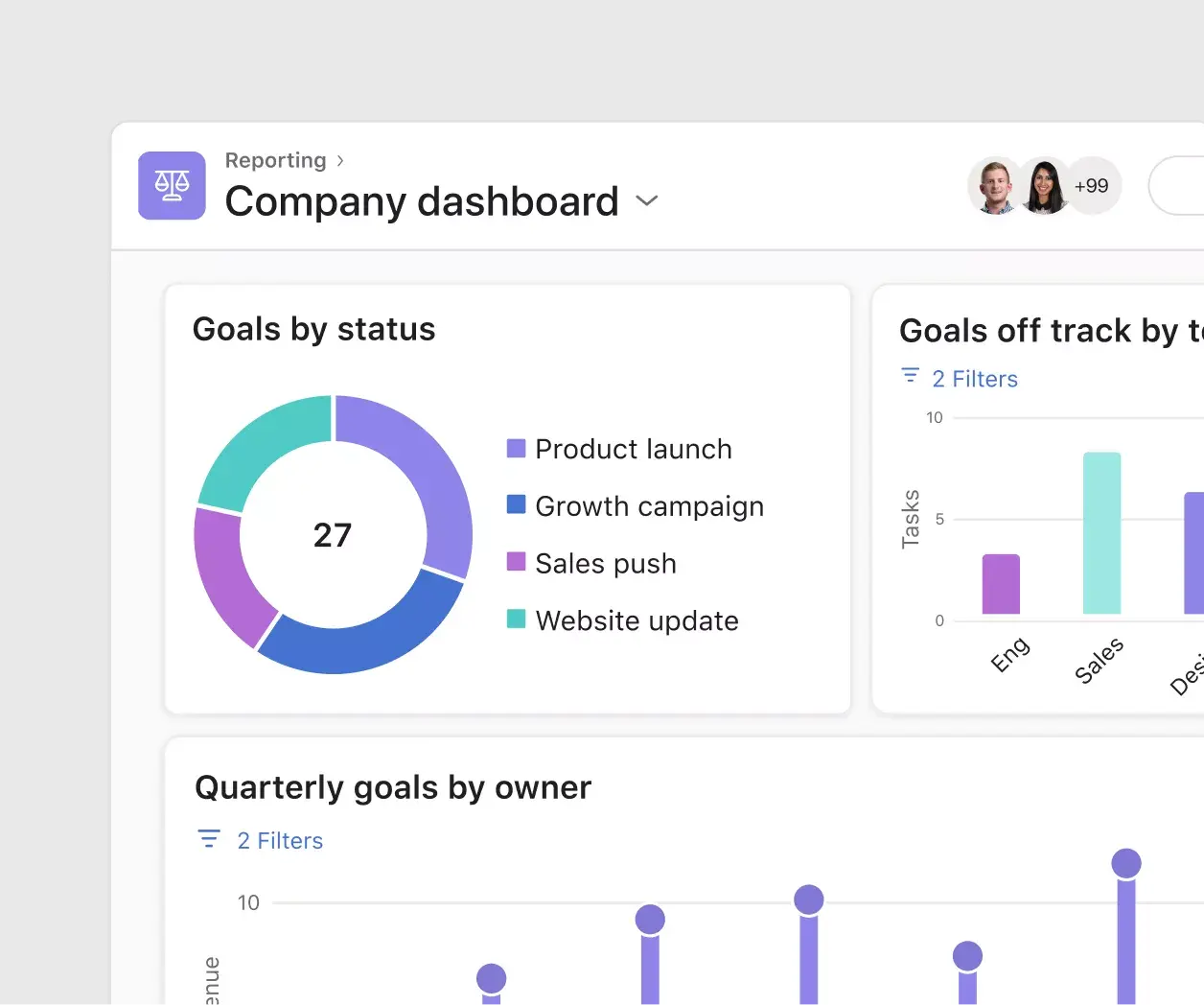
With Asana, you can create a shared project for your RFP, assign tasks to stakeholders, set deadlines for each phase, and track progress in real time. Use custom fields to score vendor proposals, automations to notify your team when deadlines are approaching, and forms to standardize vendor submissions.
Ready to make your next RFP process easier? Get started with the free RFP template today.
Free RFP process templateFAQs about RFP templates
The RFP process typically follows four steps: discovery and planning, drafting and issuing the RFP, scoring and shortlisting proposals, and selecting the vendor. Investing extra time in the planning phase pays off throughout the rest of the process.
Most RFP processes take four to eight weeks from planning to signed contract, though larger or more complex projects can stretch to three to six months. Setting clear deadlines for each phase helps you avoid unnecessary delays.
Yes, AI tools can help you draft sections, organize requirements, and score vendor responses. However, you'll still want your team to review the output to make sure it reflects your project's specific needs and evaluation priorities.
A successful RFP is clear, specific, and easy for vendors to respond to. Define expectations in every section, involve key stakeholders early, and provide enough context so vendors can submit thoughtful, tailored proposals.
Related templates
![[Templates] Editorial Calendar (Share image)](https://assets.asana.biz/transform/5fac5de2-17f6-4d69-8cd3-091a887a24bd/TG23-web-thumbnail-042-editorial-resource-management-static-2x?io=transform:fill,width:2560&format=webp)
![[Templates] Marketing Project Plan (Card) image](https://assets.asana.biz/transform/af70ac54-97b9-4639-b639-be3a3d951e3e/TG23-web-thumbnail-016-stakeholderregister-static-2x?io=transform:fill,width:2560&format=webp)
![[Templates] Operations Project Plan (Card)](https://assets.asana.biz/transform/ec3bf1b9-cbcd-413c-a20c-82bf1dbe10d2/TG23-web-thumbnail-008-risk-management?io=transform:fill,width:2560&format=webp)
![[Template] IT project plan (Card image)](https://assets.asana.biz/transform/8aa523a9-4dcb-4053-8e69-7bdf900b48b9/web-product-template-thumbnail-IT-EN-US?io=transform:fill,width:2560&format=webp)
![[Old Product UI] Sprint planning project with t-shirt sizes in Asana (Lists)](https://assets.asana.biz/transform/34817820-b376-4110-a8be-9a2c7c546a77/inline-project-planning-t-shirt-sizing-product-ui-list-view-sprint-planning-en-2x?io=transform:fill,width:2560&format=webp)



![[HR Project Plan] template Card Image](https://assets.asana.biz/transform/663b8e5e-89c9-4b0b-b48b-1b17e01d1889/TG23-web-thumbnail-033-process-improvement-static-2x?io=transform:fill,width:2560&format=webp)
![[Templates] Waterfall project management (card image)](https://assets.asana.biz/transform/d87fc21c-53f0-4bc9-9094-9789b963be9b/article-project-management-waterfall-project-management-methodology-2x?io=transform:fill,width:2560&format=webp)
![[Templates] Status report (card image)](https://assets.asana.biz/transform/9c82d399-782b-40d3-9eb1-fd7544bef794/article-project-management-project-management-maturity-model-2x?io=transform:fill,width:2560&format=webp)

![[Templates] Event Marketing Plan (Card image)](https://assets.asana.biz/transform/6c7b9329-b612-4732-910a-7917fa079f0b/TG23-web-thumbnail-014-project-chart-static-2x?io=transform:fill,width:2560&format=webp)

![[Templates] Communication plan (card image)](https://assets.asana.biz/transform/3dc9eadf-9d2d-40a2-a05d-63adb32a1de7/article-collaboration-synchronous-vs-asynchronous-communication-2x?io=transform:fill,width:2560&format=webp)



![[Templates] Design Project Plan (Card image)](https://assets.asana.biz/transform/c768a28c-822f-420f-93f9-f2eea4c93780/TG23-web-thumbnail-032-bill-of-materials-static-2x?io=transform:fill,width:2560&format=webp)
From RFP to ROI
Asana keeps teams organized in the search to find the best agencies, and keep projects on track once they select a winner.