


Nonprofit business plan template
Use a nonprofit plan to outline your mission, programs, finances, and values so donors, board members, and funders can trust your organization.
Sign up to use this template.
Nonprofit business plan template
Use a nonprofit plan to outline your mission, programs, finances, and values so donors, board members, and funders can trust your organization.
Use templateSign up to use this template.
INTEGRATED FEATURES
Recommended apps




![[Product ui] Nonprofit business plan project in Asana, spreadsheet-style project view (List)](https://assets.asana.biz/transform/dd266e4d-783e-49a4-a61e-12485a66dc0e/TG23-web-hero-027-non-profit-static-2x?io=transform:fill,width:2560&format=webp)
Summary
Nonprofits, like any business, require business plans to secure funding and maintain focus on their mission. These plans must emphasize aspects unique to nonprofit operations, particularly financial transparency for donors, board members,
Below, we outline the essential components of a nonprofit business plan template, including market analysis, operations, finances, and impact measurement.
What is a nonprofit business plan template?
A nonprofit business plan template is a document you can use again and again. It brings together your mission, programs, finances, and growth plans in one place. This gives your staff, board, donors, and funders a clear picture of how your nonprofit works and where it's going.
Nonprofit business plan vs. strategic plan template
Your nonprofit business plan template will differ slightly from your strategic plan template. The main difference is that your nonprofit business plan template is more action-oriented, while your strategic plan template is purposefully more general. You'll use your strategic plan template to create public-facing strategic plans that show your organization's overall approach for pursuing your mission, for example, an overarching strategy listed on your website.
Both templates share certain sections, such as your core mission, but your nonprofit business plan should also include action plans, such as your fundraising plan and marketing strategy. Think of it as an operational roadmap you share with internal and partner stakeholders to show what you're doing now and the steps you're taking to go further.
Nonprofit business plan vs. strategic plan
Focus:
A nonprofit business plan covers action-oriented, operational details. A strategic plan covers high-level vision and direction.
Audience:
A nonprofit business plan usually serves internal staff, board members, donors, and funders. A strategic plan usually serves public-facing stakeholders.
Timeframe:
A nonprofit business plan typically covers 1–3 years. A strategic plan typically covers 3–5 years or more.
Includes:
A nonprofit business plan includes financials, marketing, operations, and fundraising. A strategic plan includes mission, vision, and broad goals.
Update frequency:
Teams often update a nonprofit business plan annually or after major changes. They usually update a strategic plan every 3–5 years.
Why nonprofit business plan templates are important
Nonprofits are used to making the most of limited resources, and a business plan template helps show how you do it. Creating your own template has several benefits, such as:
Transparency. Being open is key to engaging donors and board members. A nonprofit business plan highlights your work and explains why it matters.
Reduce busywork. Nonprofits often have fewer resources than for-profit companies. Saving time lets your team focus on the most important tasks, which in turn supports your mission.
One source of truth. As a nonprofit, you're constantly fielding requests for information about your finances, mission, and structure. When compiled with project management software, you can create and share your nonprofit business plan template with anyone who asks, without any additional work on your end.
How to create your non-profit business plan template
Your nonprofit business plan template should cover all the key details about how your organization works. If you use project management software, add important documents and projects so everything is easy to find. Be sure to include these sections:
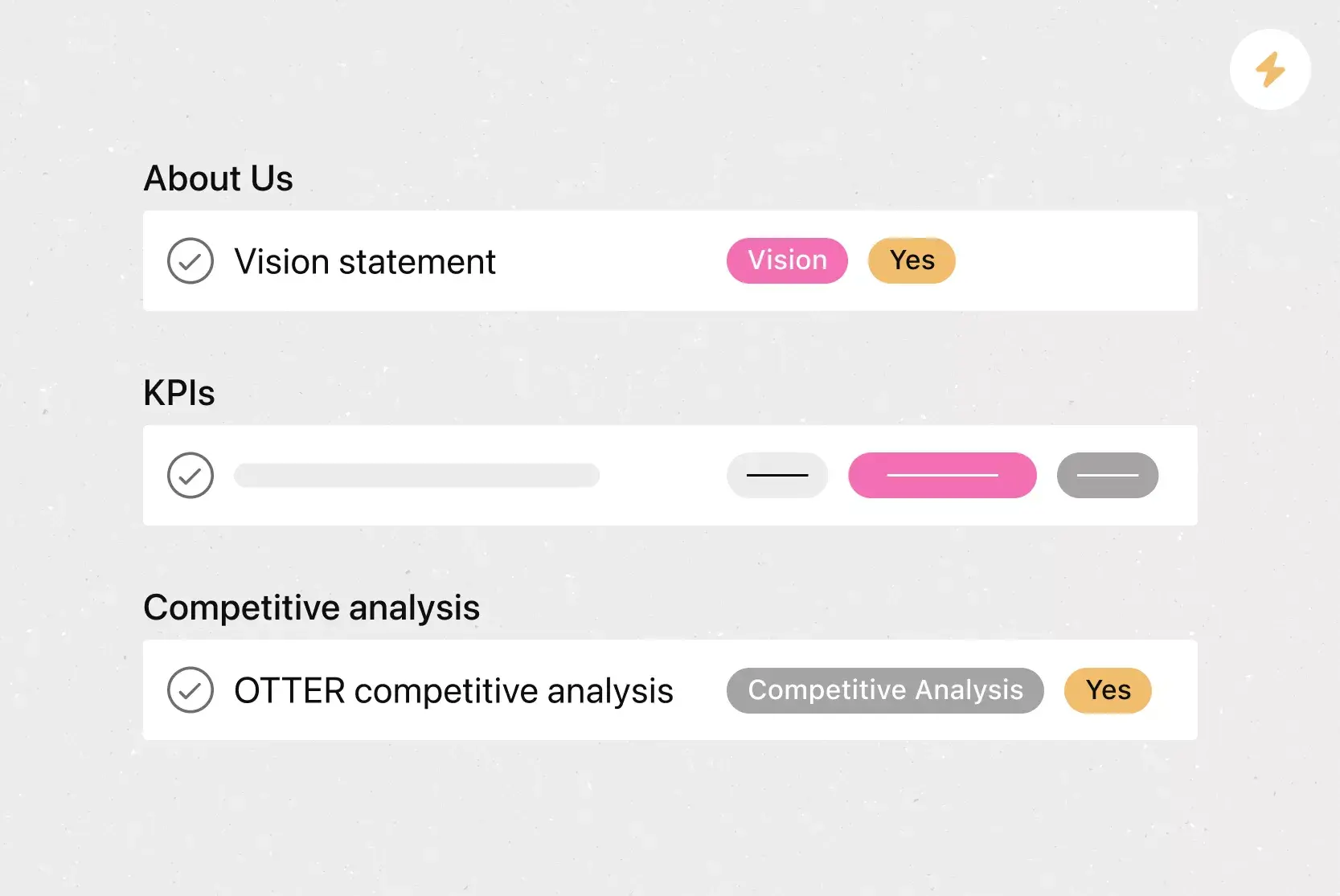
Nonprofit description: Executive summary, mission, leadership, and partnerships
What we do: Core problem, demographics, past results, and goals
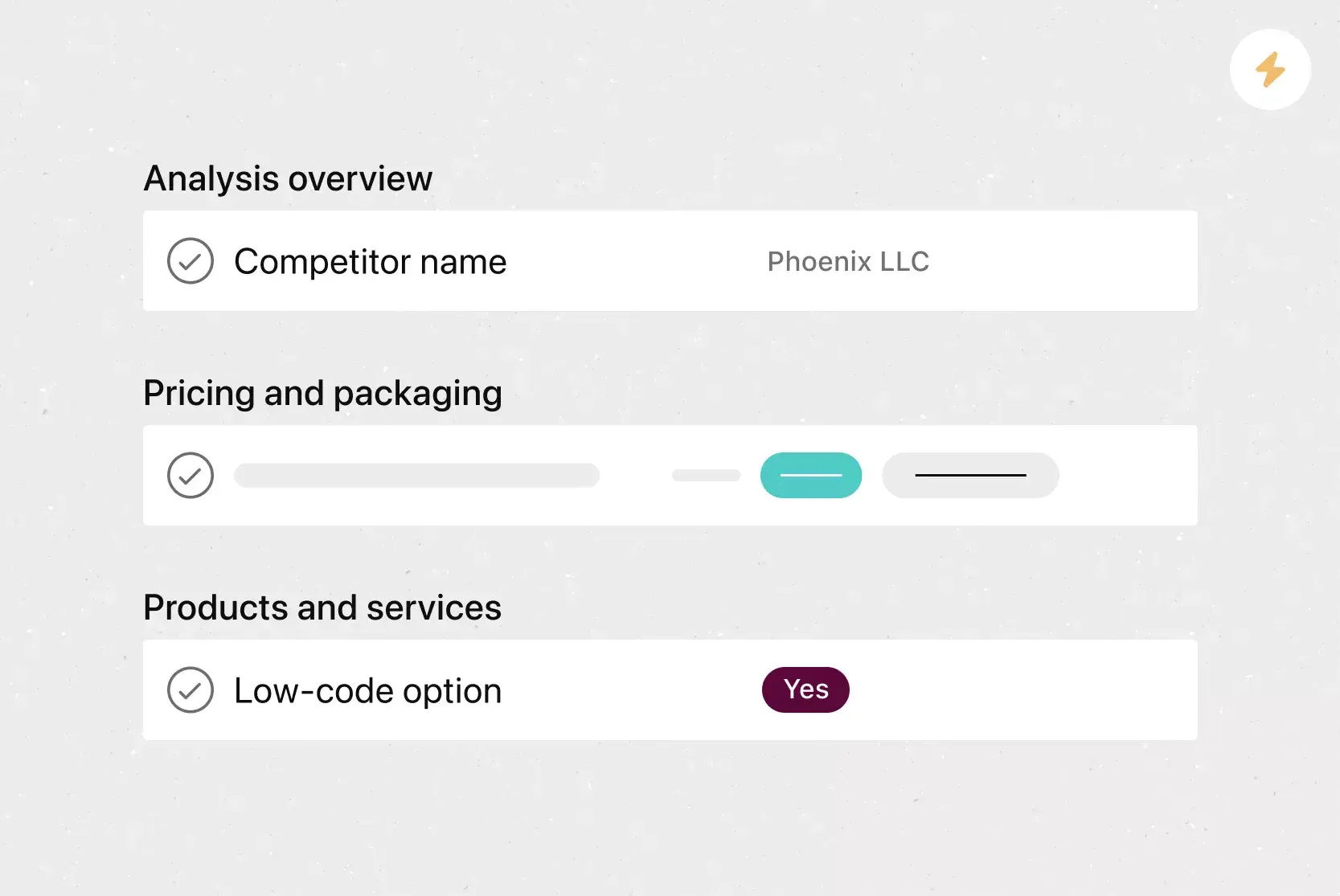
Market and needs analysis: Research, competitive landscape, and community needs
Marketing plan: Target audience, positioning, and outreach strategy
Operations plan: Day-to-day workflows, staffing, and infrastructure
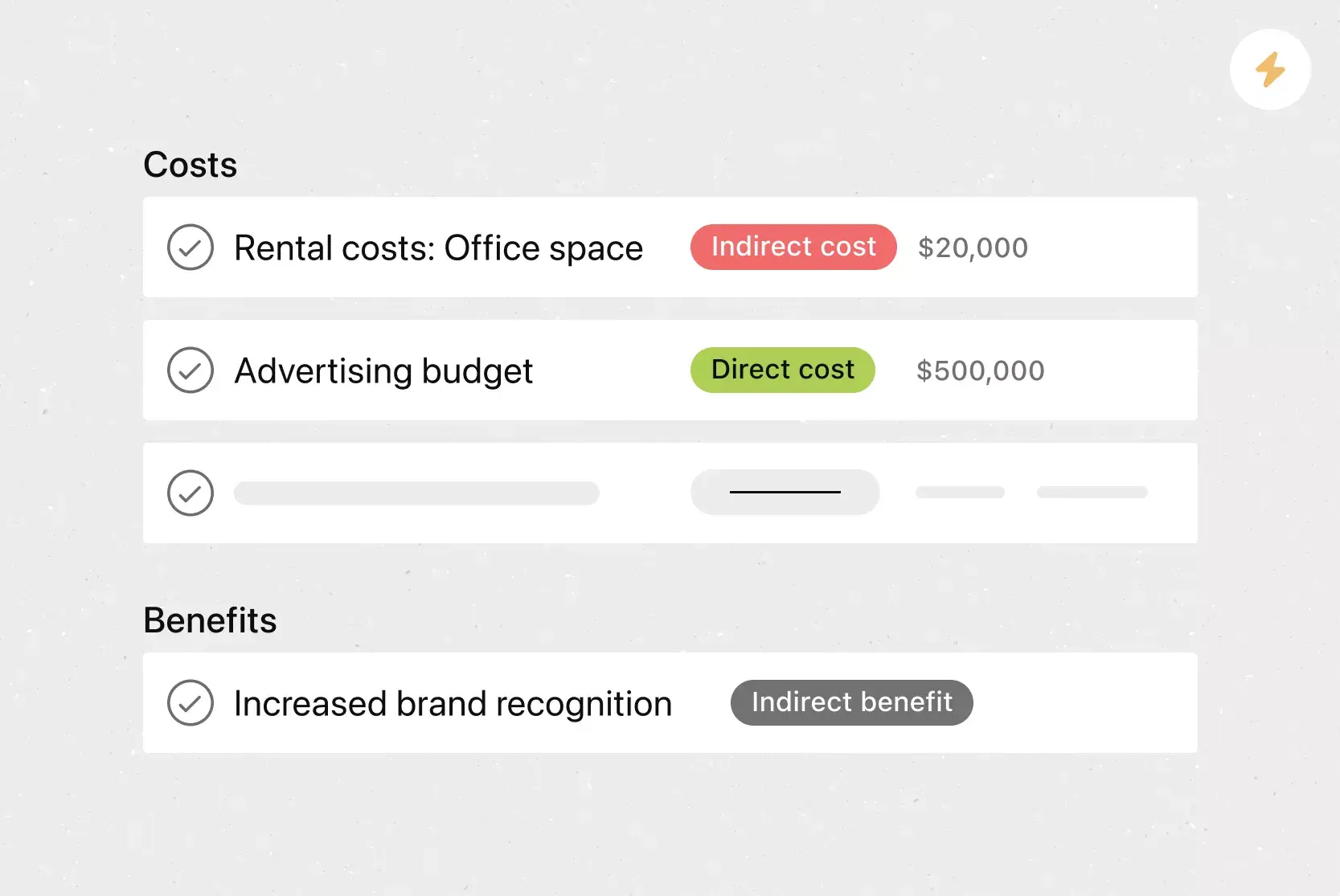
Financial plan: Budget, income statements, cash flow, and fundraising projections
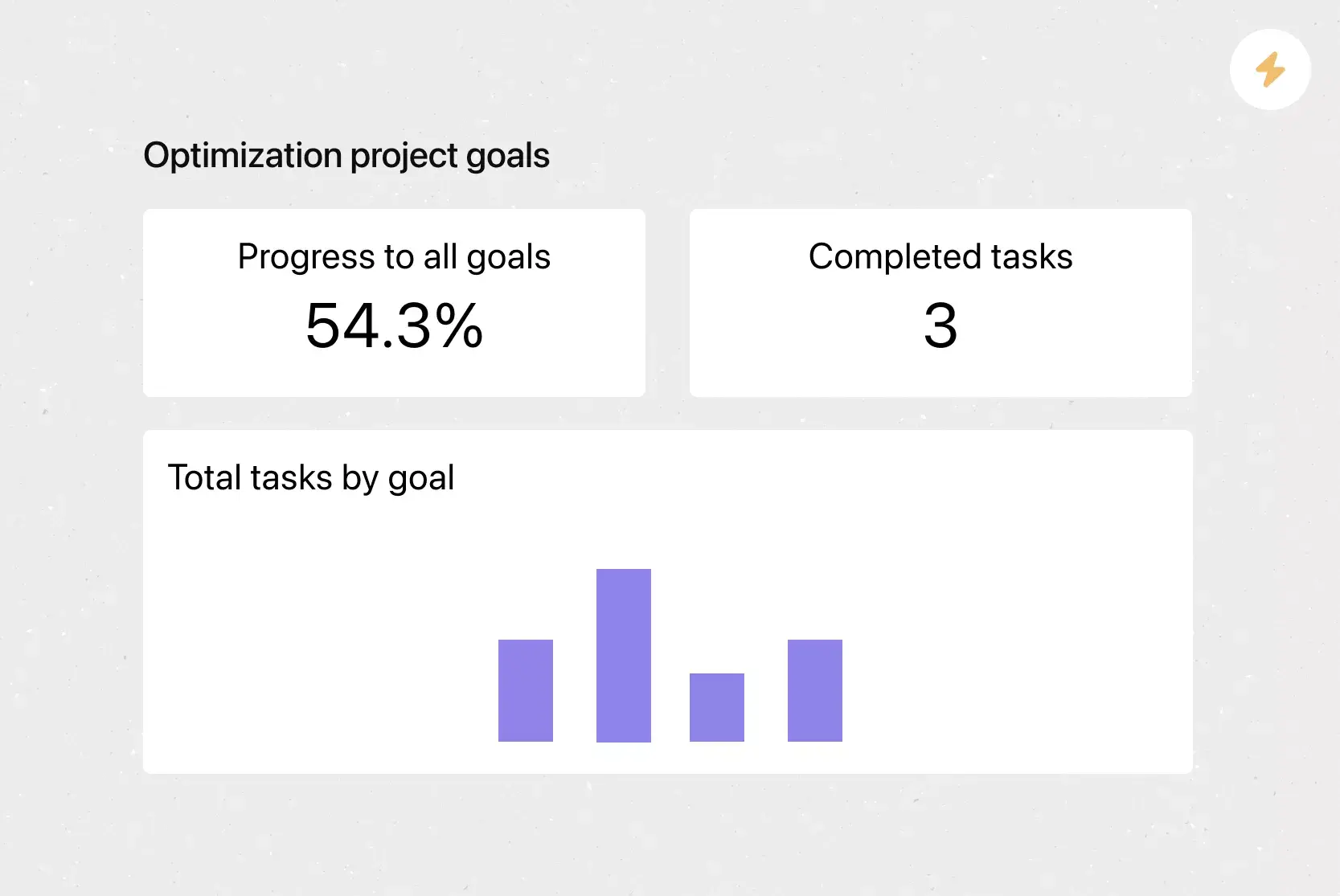
Impact plan: Measurable goals, key performance indicators, and reporting timeline
Below, we break down each section in detail.
Non-profit description
Describe the basics of your organizational structure. Include:
Mission and vision statement
Community benefit
Staff and management team
Board of directors
Partnerships
What we do
List any items related to what you do as an organization, including reports that demonstrate results. For example, you can include:
Core problem we solve
Demographics we reach
Past results
Business model
Goals
Market and needs analysis
Your market and needs analysis provides the research and data that support your nonprofit's purpose. This section shows donors and funders that there is a real, unmet need for your services. Include:
A clear statement of the problem or community need you're addressing
Data and research that support the scale and urgency of the need
An overview of other organizations working in your space and how your approach differs
The geographic area or population you serve
Any trends or external factors that affect the need for your work
A well-documented needs analysis shows donors, foundations, and grant-making bodies that your nonprofit isn't duplicating existing efforts. Instead, it's filling a real gap.
Marketing plan
This is a space for your marketing strategy (the methods you'll use to reach your target audience) and the analyses you used to develop it. Here, you can attach:
Target market research
Target audience and social media messaging
Market analysis (including a competitive analysis)
Your positioning (on hot-button issues related to your mission)
Outreach plan
Operations plan
Your operations plan outlines how your nonprofit runs on a day-to-day basis. It gives stakeholders a clear picture of the people, processes, and infrastructure behind your programs. Include:
Day-to-day workflows and key processes
Staffing structure and volunteer management
Facilities, technology, and equipment you rely on
Partnerships or vendors that support your operations
Compliance requirements or legal considerations specific to your mission
A strong operations plan reassures funders that your nonprofit has the infrastructure to deliver on its promises. It also helps your internal team stay aligned on how work gets done.
Financial plan
Nonprofits must clearly show how they spend money. Sharing transparent financial statements builds trust with donors, helping you reach your fundraising goals and improve your financial outlook. Include the following in this section:
Budget
Income statements
Cash flow statements
Grant management plan
Fundraising plan and projections
Impact plan
Your impact plan brings all the pieces together. It shows how your programs, fundraising, and daily work all support your mission. Include:
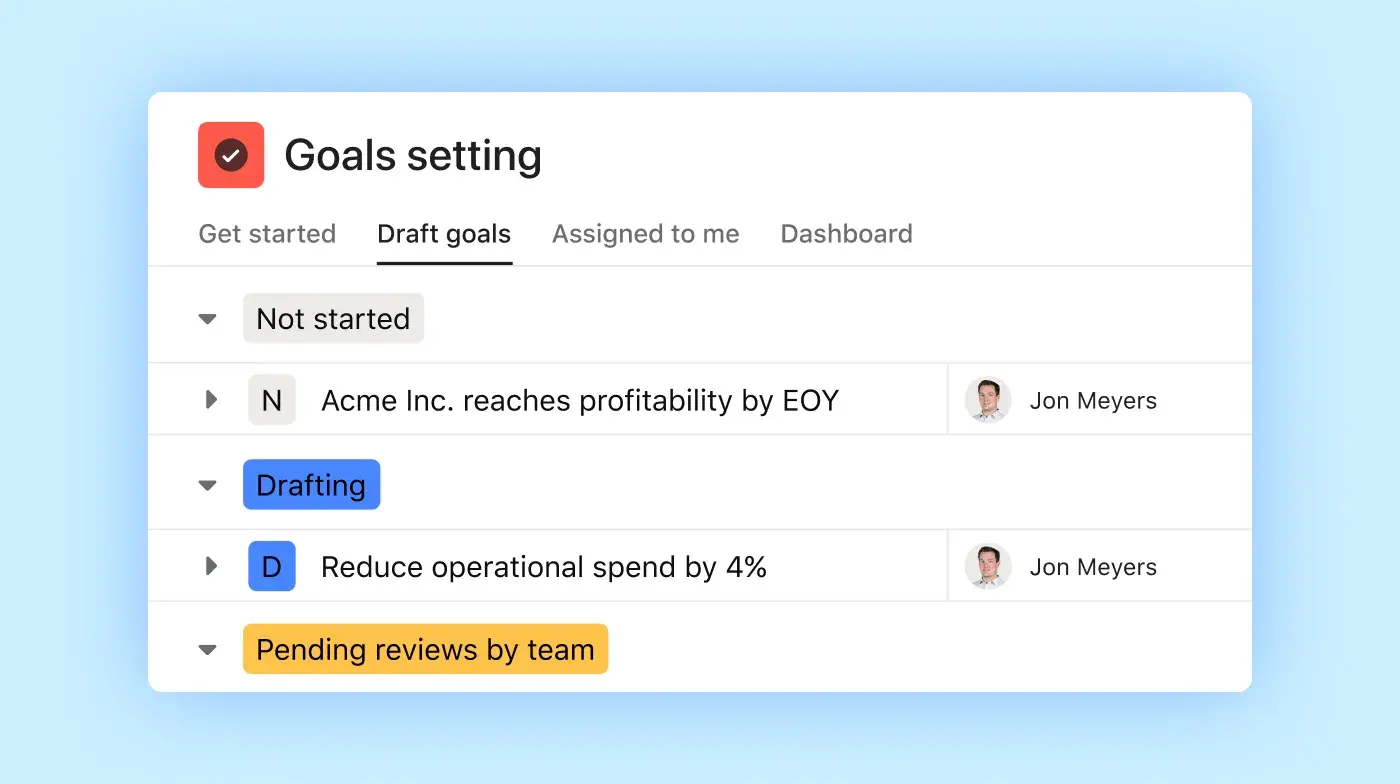
Specific, measurable goals for the next one to three years
Key performance indicators you'll use to track progress
Methods for collecting and evaluating data on your outcomes
A timeline for reviewing and reporting on your impact
Stories or case studies that illustrate your results so far
Donors and grant-makers want to see proof that their support makes a difference. An impact plan shows accountability and helps build lasting trust with those who fund your work.
Tips for creating your nonprofit business plan
Writing a nonprofit business plan can be manageable. Keep these tips in mind as you work on your template:
Start with your mission. Every section of your business plan should connect back to your core mission. If a section doesn't clearly support your purpose, reconsider whether it belongs.
Keep it concise. Your business plan should be thorough but not long. Aim for clear, focused language that respects your reader's time.
Use real numbers. Wherever possible, back up your claims with data. Concrete figures build credibility with donors and board members alike.
Write for your audience. Think about who will read this plan. Tailor the level of detail and language to the stakeholders you're trying to reach, whether that's a grant-making body, a corporate sponsor, or your own board.
Update it regularly. Your business plan should change as your organization grows. Review it at least once a year to keep it up to date with your programs, finances, and goals.
Manage your nonprofit business plan with Asana
Once your nonprofit business plan is complete, you need a way to keep it organized, accessible, and connected to your team's day-to-day work. Asana gives you the tools to do exactly that.
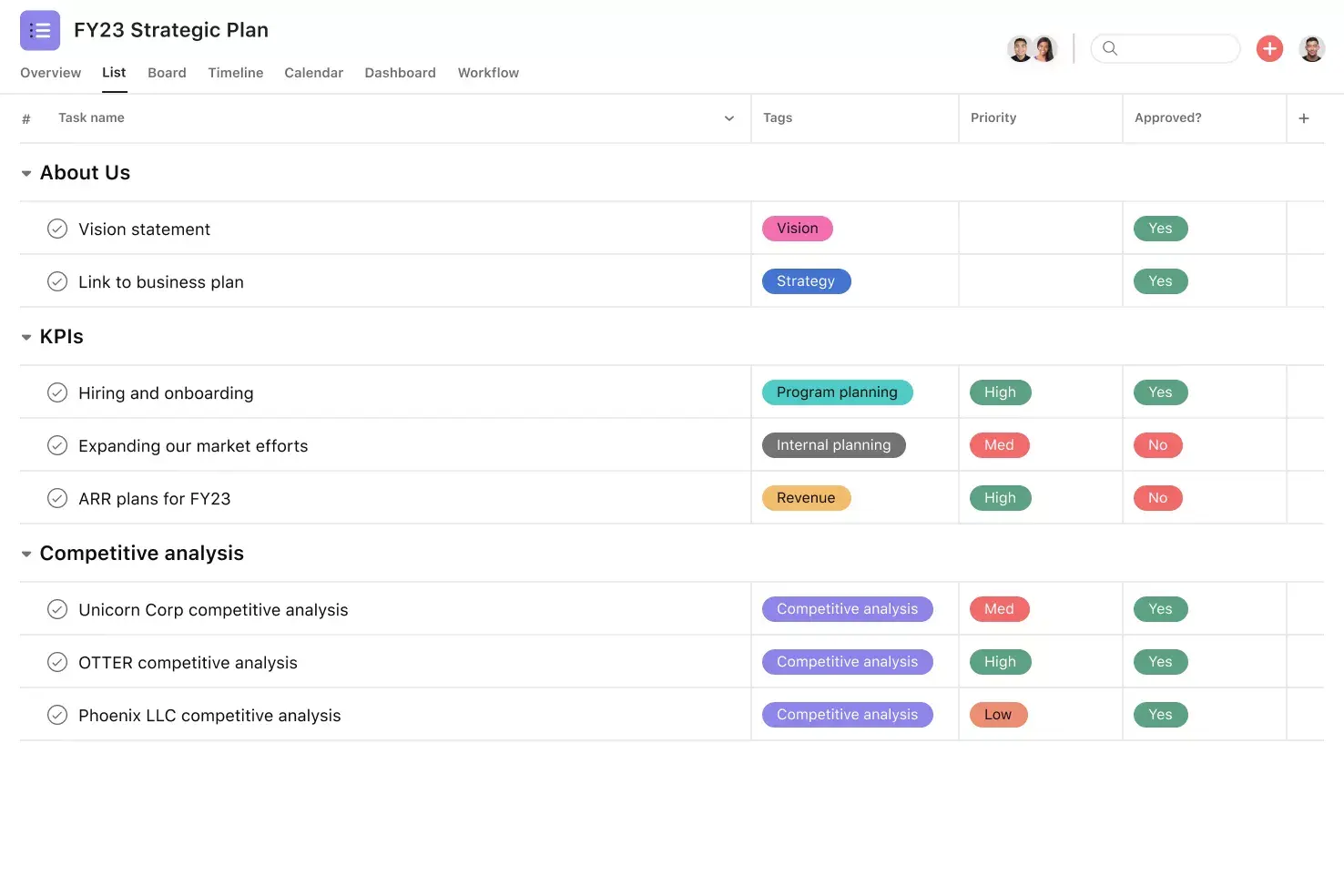
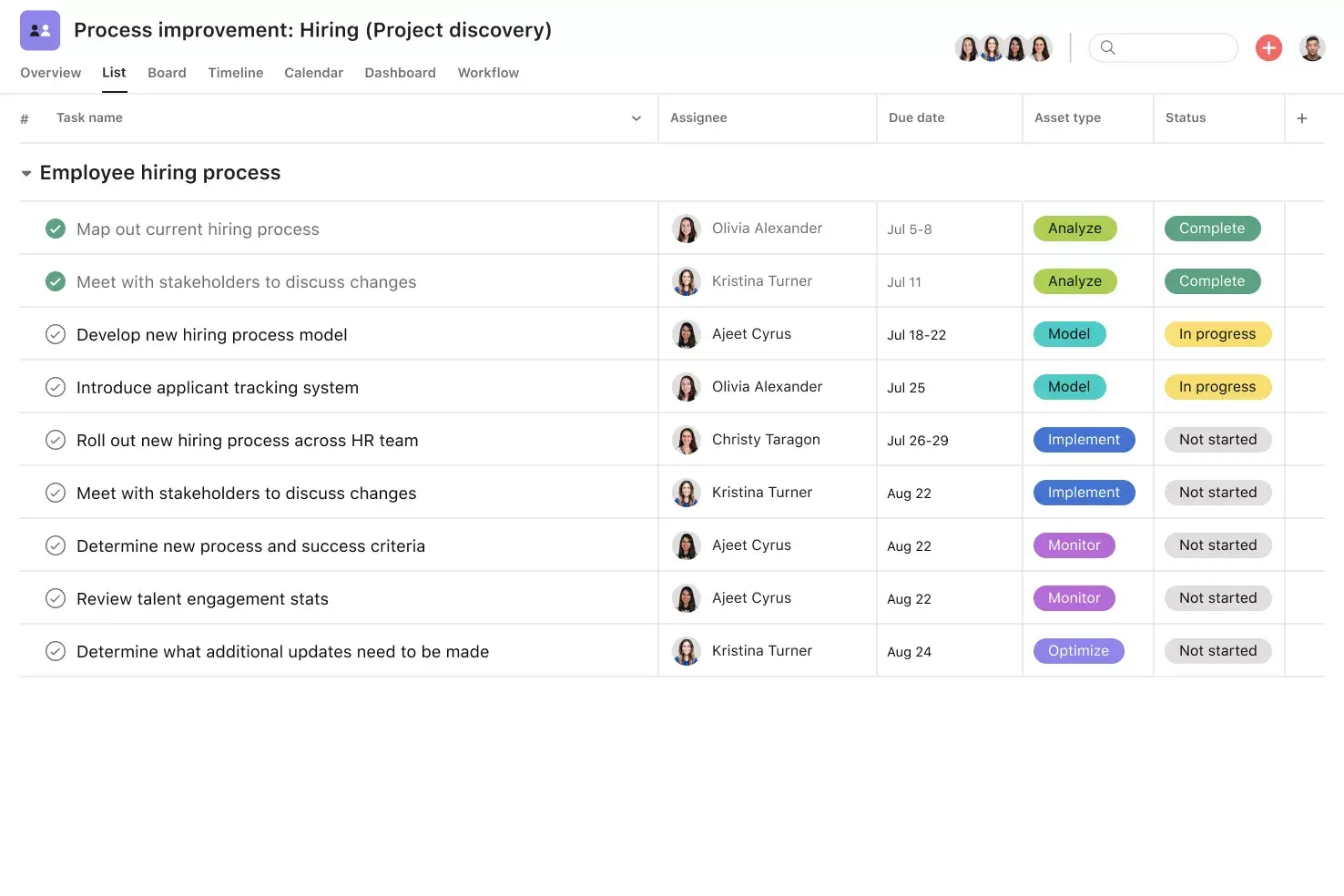
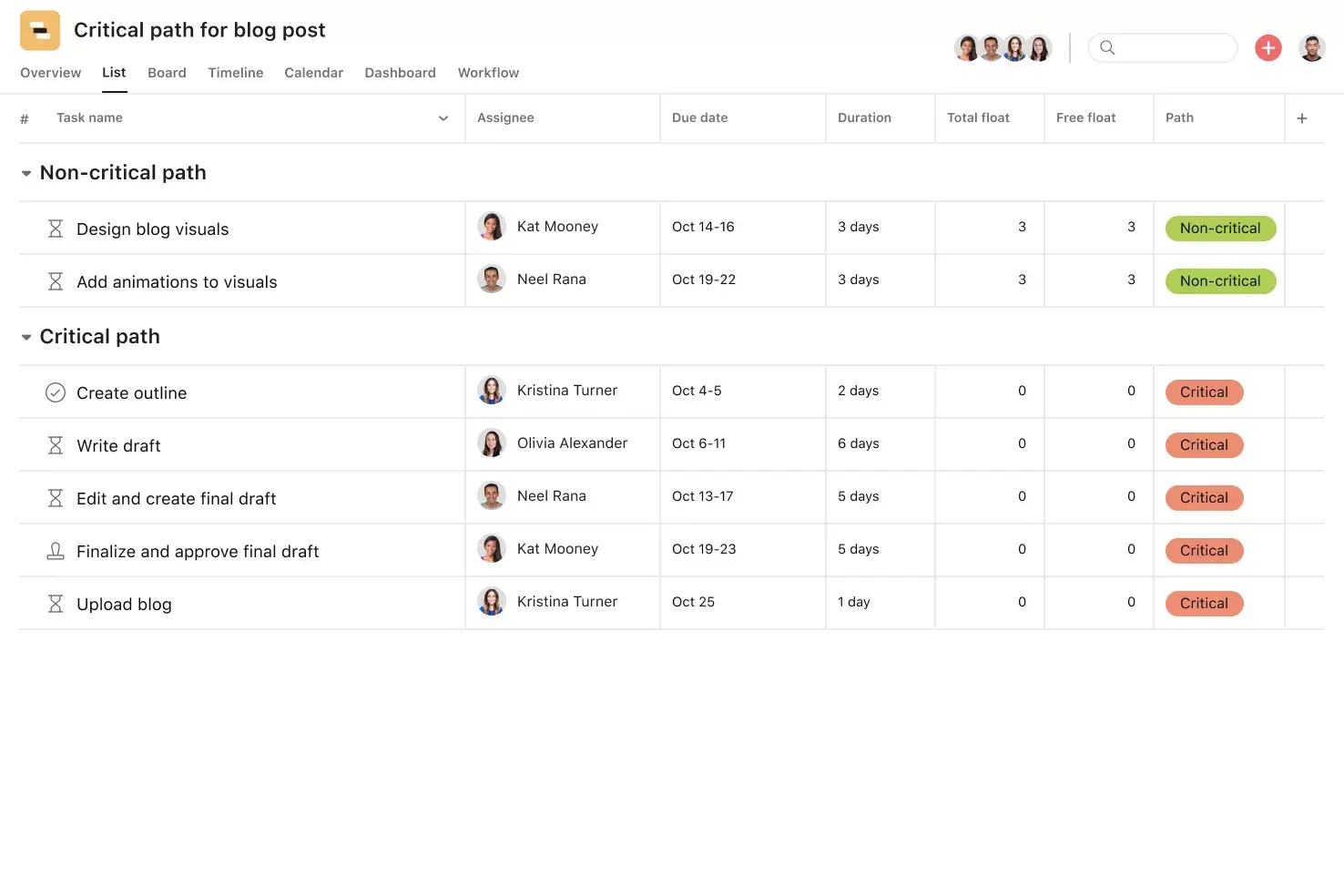
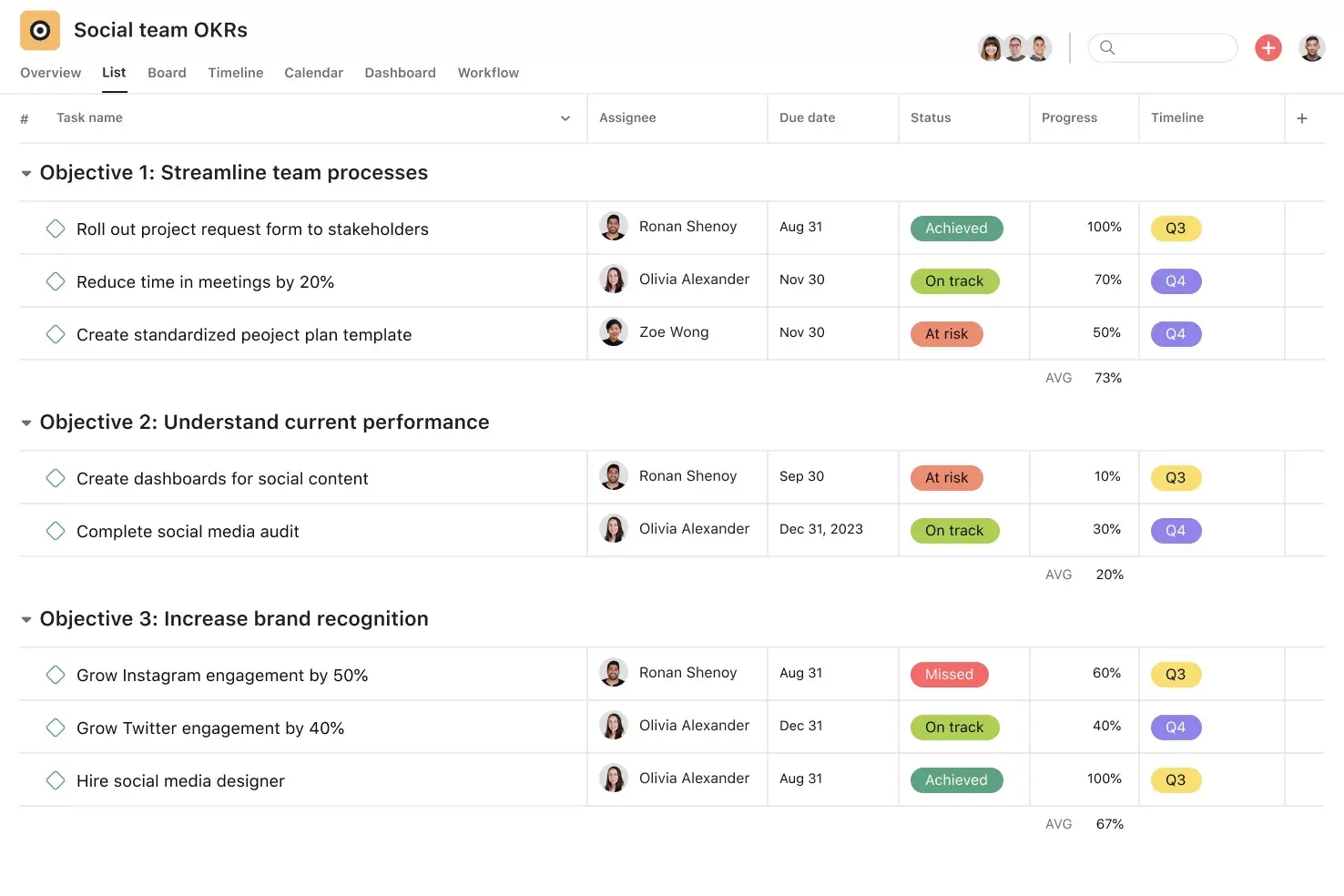
List View. See all of your business plan tasks, due dates, and custom fields at a glance in a grid-style view, so your entire team knows who's doing what by when.
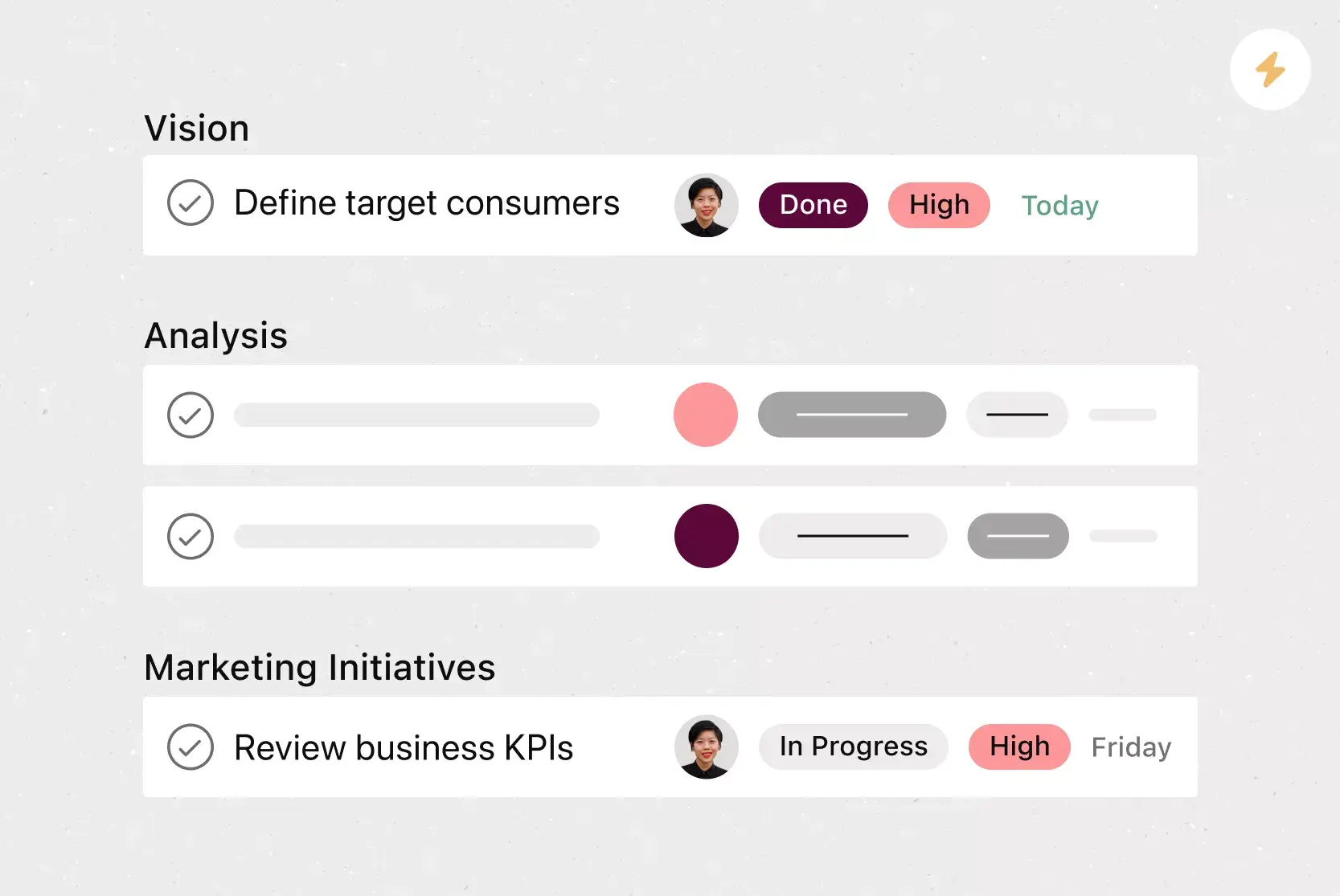
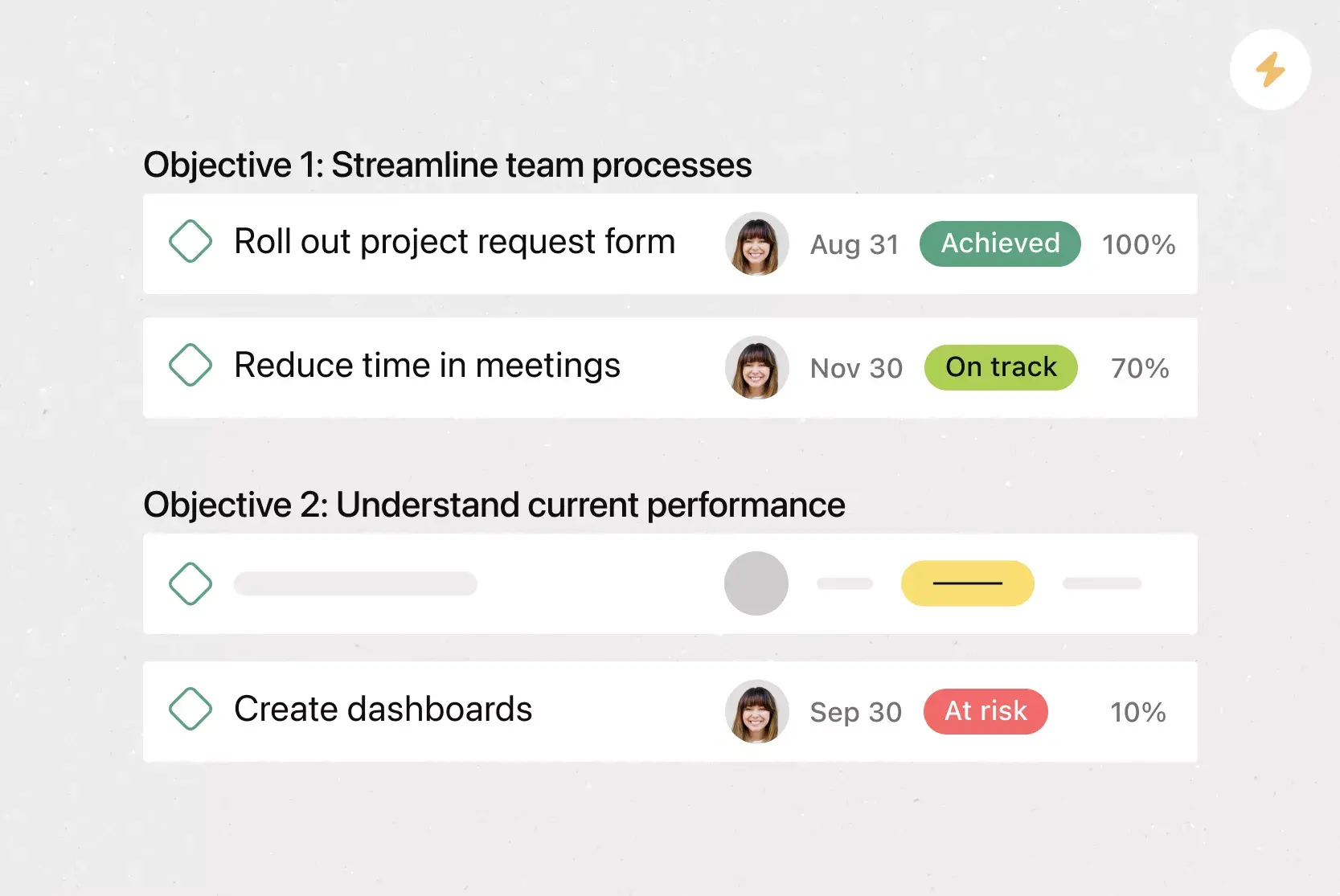
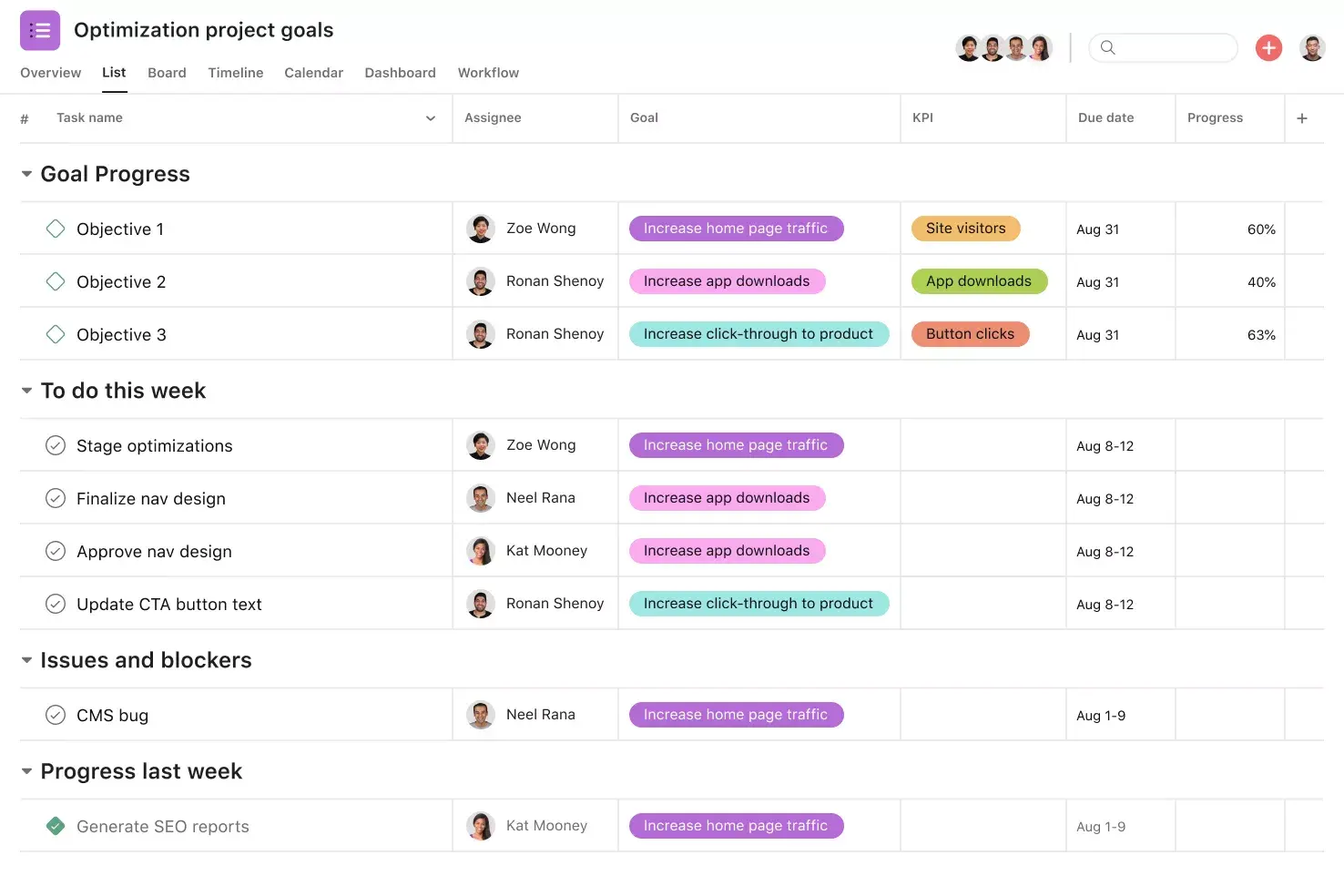
Goals. Connect your nonprofit's goals directly to the work that supports them, giving team members real-time clarity into how their tasks contribute to your mission.
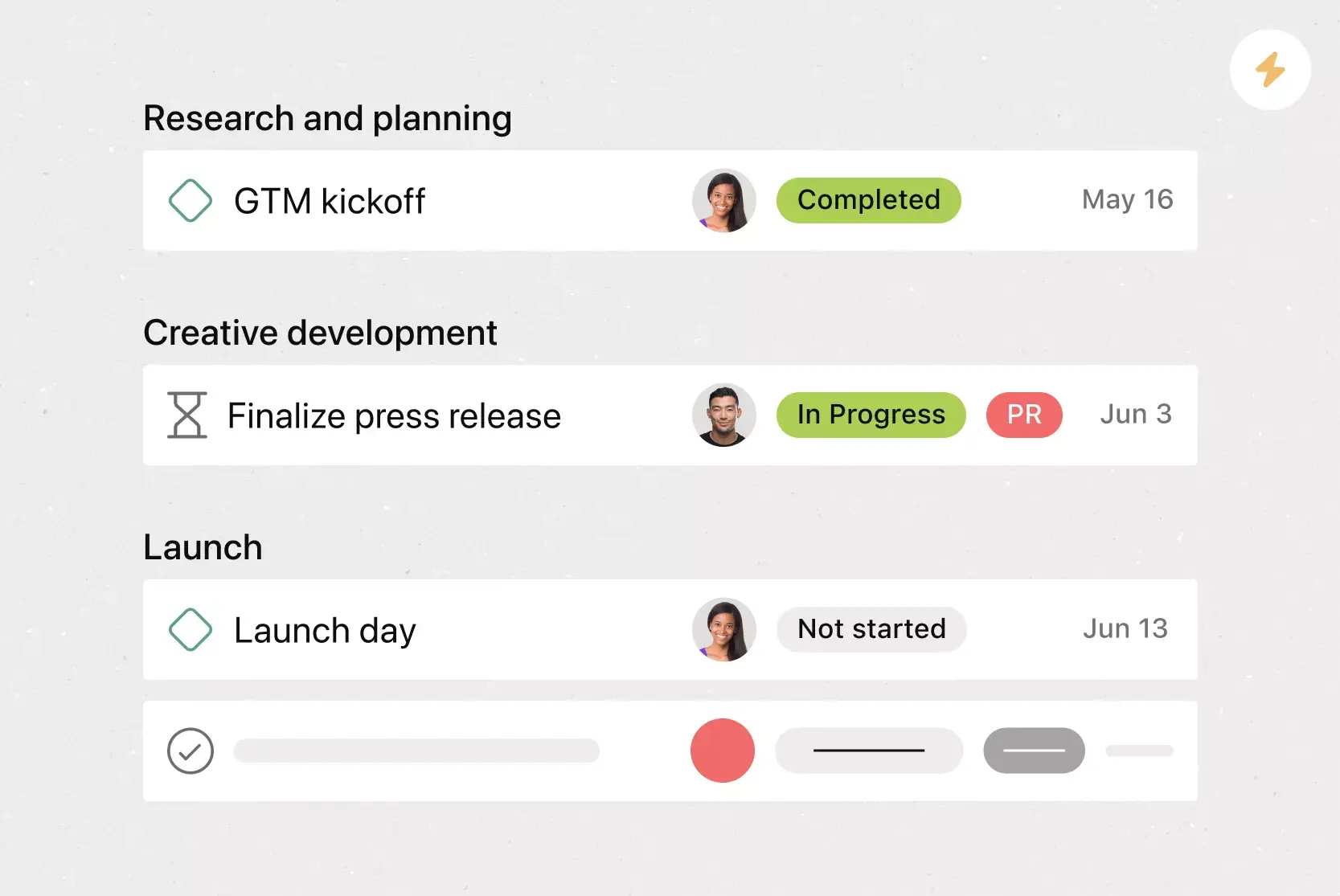
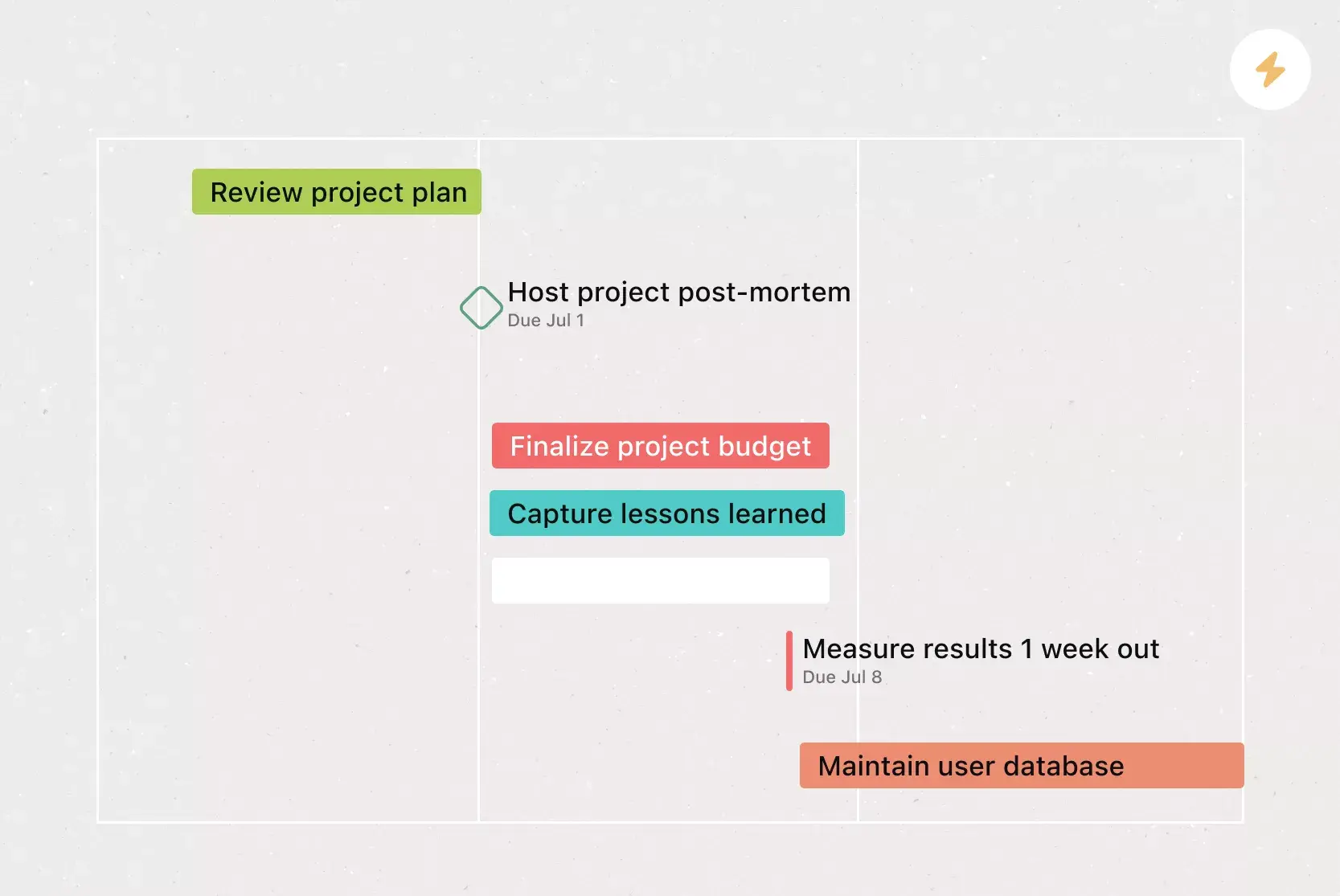
Milestones. Set key checkpoints throughout your plan to track progress and keep stakeholders informed of your pace toward each goal.
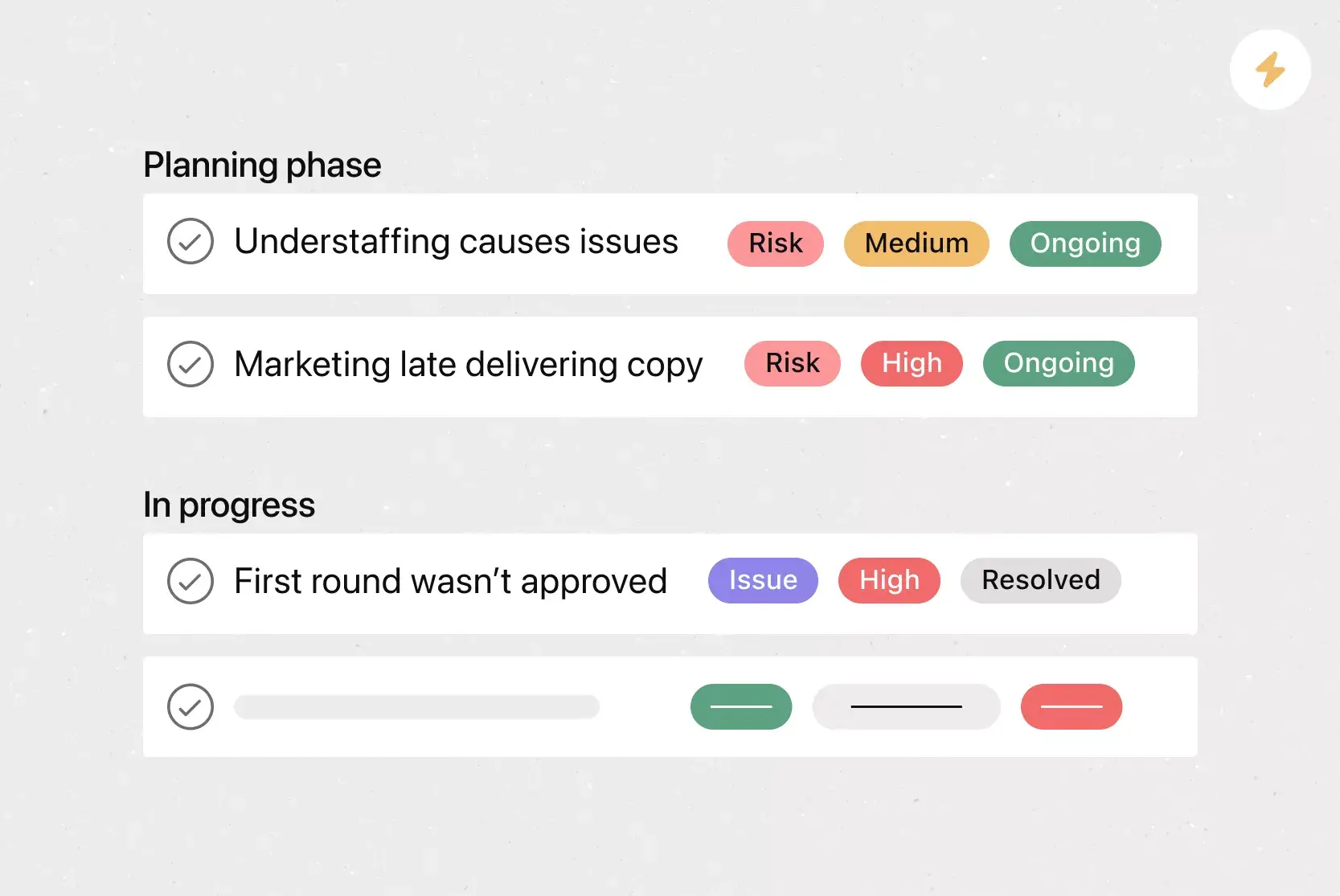
Custom fields. Tag, sort, and filter work by priority, status, or any custom category you need, then share those fields across projects for consistency.
Ready to put your nonprofit business plan into action? Get started with Asana and bring your mission, your team, and your work together in one place.
FAQs about nonprofit business plans
First, create your template including sections for your executive summary, mission statement and purpose, market and needs analysis, marketing plans, operations, finances, and impact measurement. Then when you're ready to write your nonprofit business plan, fill in the blanks and customize it to fit your organization.
Yes. A nonprofit business plan gives you a structured overview of your strategies, accomplishments, and goals that you can share with stakeholders and reuse whenever you need an updated plan.
Most nonprofit business plans range from 15 to 30 pages. Focus on being thorough without repeating yourself, and consider a one-page summary version for prospective donors.
Review your nonprofit business plan at least once a year, and update it whenever your organization goes through a major change like launching a new program or adjusting your fundraising strategy. Keeping it current ensures it stays useful for both internal decisions and stakeholder communication.
A nonprofit business plan shows corporations your organization's impact and how donations are being spent. Most corporations want to see these numbers before they invest, and a clear business plan helps you share that information confidently.
Related templates

![[Templates] Product Roadmap (Card image)](https://assets.asana.biz/transform/2728edf4-eb35-4dd5-8d03-25ba8cbe5864/TG23-web-thumbnail-028-scrumban-feature-static-2x?io=transform:fill,width:2560&format=webp)




Create templates with Asana
Learn how to create a customizable template in Asana. Get started today.