Marketing plan: How to write one + template & examples


85% of Fortune 100 companies choose Asana¹






Summary
A marketing plan helps your team turn ideas into action. This guide breaks down what to include, how to create a marketing plan step by step, and offers a free template to get you started today.
A few months ago, a team came to us with a familiar challenge. They had big ideas, a tight-knit team, and real excitement about their next campaign, but no clear marketing plan. Tasks were scattered, timelines kept slipping, and no one was sure how the work connected to their goals.
They didn't need more ideas. They needed a structure. So, grab your free Asana marketing plan template, and let's get started.
Discover the latest trends in strategic marketing collaboration
The secret to high-performing marketing teams? AI. Asana and Meltwater collected insights from 830 marketers to share their insights. Unlock the strategies marketing leaders are using to drive real business impact.
What is a marketing plan?
A marketing plan is a strategic document that outlines how your team will promote products, reach your target audience, and achieve business goals. It combines your mission statement, value proposition, and marketing objectives into a single, actionable framework for organizing your strategy.
A well-built plan aligns every part of your marketing strategy to help you grow your customer base. This includes:
Content marketing: Blog posts, videos, and resources that attract your audience
Email campaigns: Targeted messages that nurture leads and retain customers
Social media: Channels where you engage and build community
Public relations: Efforts that build brand awareness and credibility
What's the purpose of a marketing plan?
The main purpose of a marketing plan is to turn high-level goals into clear, focused marketing activities. It helps your marketing team make smart decisions, track progress, and work together toward shared outcomes.
With a detailed plan, you can:
Prioritize your marketing tactics
Allocate your marketing budget effectively
Connect with potential customers on the right channels
Keep stakeholders focused on long-term growth

To be successful as a marketer, you have to deliver the pipeline and the revenue.”
What's included in a marketing plan?
A marketing plan includes eight key elements that give your team structure, insight, and direction. Each one helps you reach the right audience at the right time and measure real impact.
1. Target market and customer personas
Define who you're trying to reach. Your target market section should include detailed demographics, pain points, and motivations. These are often captured as personas to help tailor your message and guide your marketing efforts.
2. Mission statement and value proposition
Clarify what your company stands for and why it matters. Your mission statement sets the tone, while your value proposition explains why your product or service is the right fit for your target customers.
3. SWOT analysis
Use a SWOT analysis to examine internal strengths and weaknesses, as well as external opportunities and threats. It helps you position your brand in a competitive landscape and adjust your marketing strategy accordingly.
4. Marketing objectives and business goals
Outline your specific marketing objectives and how they connect to broader business goals. These should be time-bound, measurable, and clearly aligned with the outcomes your company is working toward.
5. Marketing mix and channels
List the types of marketing tactics and marketing channels you'll use. A marketing mix defines how you'll deliver your message and attract new customers through social media, email marketing, content strategy, and SEO.
6. Budget and resource allocation
Break down your marketing budget and show how you'll invest in people, platforms, and tools. A clear budget helps set expectations for the marketing team and prevents overspending across campaigns.
7. Timeline and roadmap
Provide a high-level roadmap of your marketing campaigns, including major phases and milestones. This timeline keeps the work moving forward and gives visibility to stakeholders.
For channel-specific work, you can also use tools like an SEO roadmap template to organize search initiatives and connect optimization work to your larger marketing strategy.
8. KPIs and metrics
Identify the key performance indicators (KPIs) and success metrics you'll use to track performance. These might include conversion rates, market share, or brand awareness.
How to create a marketing plan step by step
The teams at Asana once worked with a small company launching a product they believed in. They had energy, a budget, and a launch date, but no plan. Without clear goals or a shared strategy, they missed deadlines, overspent, and struggled to reach the right audience.
It's a story we see often. A clear, effective marketing plan could've made all the difference. Here's how to build a marketing plan that keeps your work focused and your team aligned.
Step 1: Define your mission, vision, and value proposition
Start by writing down why your company exists, your vision for the future, and what makes you different. These three elements help guide every decision that comes next and make it easier to communicate your value to others.
Step 2: Identify your target market and customer personas
Figure out who you want to reach. Gather real market data, identify patterns, and create customer personas and an ideal customer profile for your ideal buyers.
Include details like:
Basic traits like job role and industry
Problems they're trying to solve
Platform preferences (LinkedIn, YouTube, or elsewhere)
Understanding customer needs will shape everything that follows.
Pro tip: Struggling to define your target audience? Try the bullseye targeting approach. It helps you narrow in by industry, location, company size, demographics, and more.
Step 3: Set measurable marketing objectives
Decide what success looks like. Your business goals and objectives should be specific, time-bound, and trackable, with clear deadlines and owners.
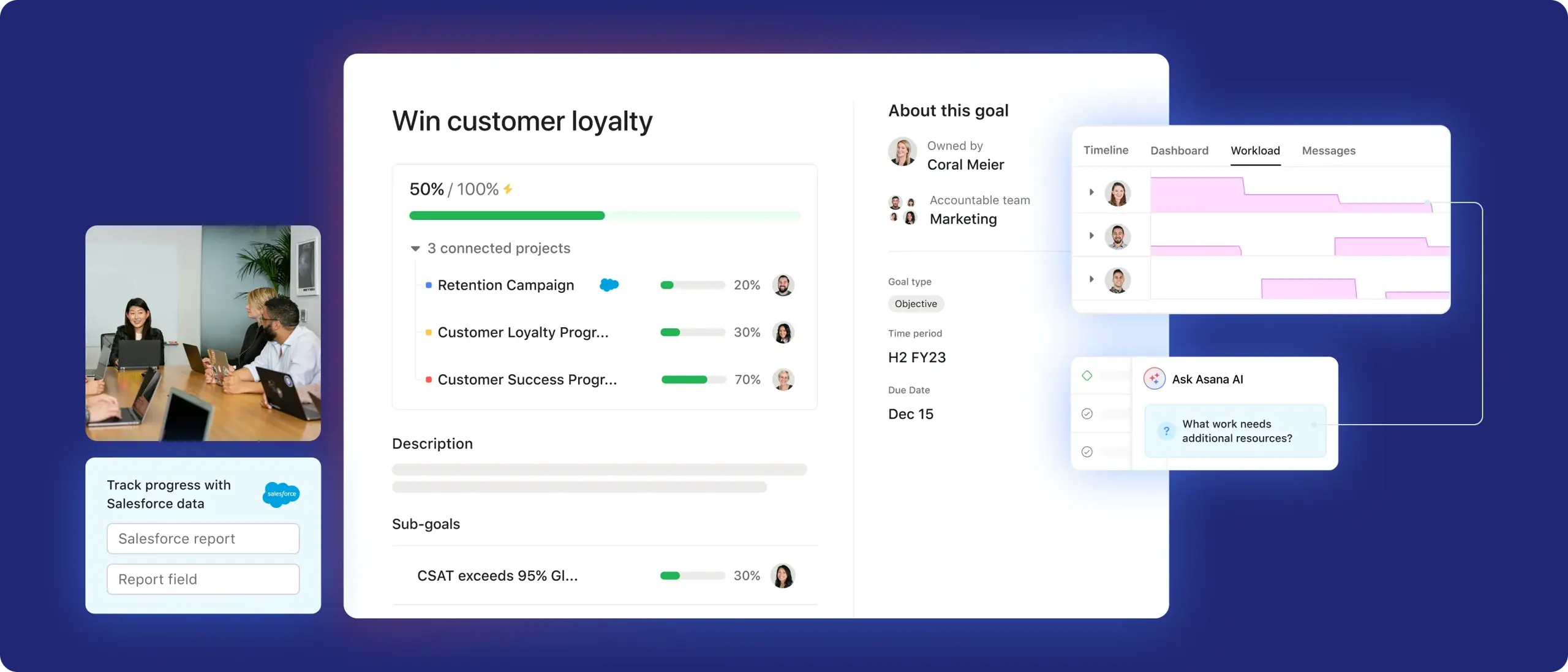
For example, "Increase newsletter signups by 15% this quarter" or "Double engagement on Instagram in the next 60 days." In Asana, you can link each initiative to a company- or team-level goal, so your progress is automatically updated as work progresses.
Step 4: Research your competition
Before you start building a marketing plan, take time to understand who you're up against. Conduct a competitive analysis to see how others position themselves, what kinds of campaigns they're running, and how they're engaging with their audience.
If you want a quick way to map competition, try using a SWOT analysis to sketch your strengths and areas of risk. Or streamline your research with a market research template that organizes competitor insights and buyer trends in one place.
Pro tip: Use a SWOT analysis to identify strengths, weaknesses, opportunities, and threats. It's a fast way to sharpen your marketing plan and respond to market trends.
Step 5: Choose your marketing mix and plan your content
Now it's time to connect the dots. This is when your team chooses which marketing channels to use and starts planning what to say and when to say it.
Think about formats like:
Blog posts
Videos
Infographics
Product tutorials
Asana can help you map out campaigns, assign content owners, and streamline marketing project management in one place. You can tag each task by type, goal, or timeline, which helps team members stay on the same page.
Step 6: Set your marketing budget
Think of your budget as a market planning tool, not a restriction. Decide where it makes sense to invest across tools, channels, campaigns, or people. Don't forget to factor in platform costs, contractor time, and ad pricing. A clear, realistic budget helps you focus on what's worth the investment.
Step 7: Build your roadmap and campaign calendar
Turn your marketing plan into a working timeline. Map out your campaigns, key milestones, and who's responsible for what with a clear work breakdown structure. This calendar becomes your source of truth. It keeps your marketing team moving in sync and helps everyone see how the pieces fit together.
Step 8: Choose your metrics and KPIs
Decide how you'll measure progress. Depending on your goals, you might track signups, engagement, revenue, conversion rate, or return on investment (ROI) in a shared KPI template. What matters is choosing numbers that reflect whether your plan is working and being consistent about how you track them.
Read: 27 business success metrics you should be trackingStep 9: Share with stakeholders and adjust often
Once your plan is in motion, keep it visible. Share progress with your team and stakeholders, and make adjustments when priorities change.
Asana makes this easier by helping you assign action items, track updates, and adjust timelines without losing momentum. Developing a marketing plan isn't a one-time task; review it regularly to ensure it reflects your actual work.
See marketing planning in action
With Asana, marketing teams can connect work, standardize processes, and automate workflows—all in one place.


Types of marketing plans
Understanding how to create a marketing plan starts with choosing the right type, whether you're working on content, digital marketing, launching a new product, or planning for the year ahead.
Type of marketing plan | Purpose | Best for |
Annual marketing plan | Lays out goals and key work for the year | Company-wide priorities and budget planning |
Content marketing plan | Covers blogs, videos, infographics, and other materials | Sharing useful ideas and telling your brand story |
Social media marketing plan | Lists what to post, when, and where | Tracking engagement on LinkedIn, Instagram, or TikTok |
Product launch plan | Shows what needs to be done before launch | Keeping teams in sync and meeting tight deadlines |
Email marketing plan | Organizes newsletters and promotions | Sending the right message to the right audience |
Organic marketing plan | Focuses on blog posts and website updates | Improving search engine visibility |
Campaign-specific plan | Short-term strategies for events or sales | Staying on track during busy periods |
Marketing plan examples from world-class teams
Looking for inspiration? The best brands bring their marketing plans to life every day. Below are marketing plan examples from top-performing teams that showcase creative strategies and impactful execution.
Trinny London
Challenge: Trinny London, a fast-growing beauty brand, needed to efficiently acquire new customers through social media while maintaining a strong sense of community.
With the competitive landscape of consumer brands, it was critical to ensure their ad spend was laser-focused on reaching the right audience segments. This is one of the most compelling examples of marketing plans for social media success.
Key marketing strategies:
Used a work management tool to centralize the creation, testing, and execution of ads.
Targeted ad spend to hone in on the most relevant audience segments.
Leveraged multiple social channels to grow brand affinity and audience engagement.
Results:
Improved ad efficiency and drove better performance across campaigns.
Increased likes and subscriptions on YouTube.
Takeaway: This marketing plan example demonstrates how centralized ad management and refined audience targeting can drive results in competitive consumer markets.
Read the case study to see how Trinny London capitalized on paid advertising and social media.
Turn your marketing plan into action
Creating a marketing plan promotes clarity and accountability across teams, so every stakeholder knows what they're responsible for, by when. Reading this article is the first step to achieving better team alignment.
Now you can ensure every marketing campaign contributes to your company's bottom line. Ready to put your plan into motion? Get started with Asana and bring your marketing strategy to life.
Use a free marketing plan template to get started
Once you've nailed down your strategy and understand how to make a marketing plan, our marketing templates can help you put it into action.
With Asana, you can:
Track every detail in one place, from creative requests to approvals
Customize your project roadmap and assign tasks
Build timelines or calendars to stay organized
Loop in stakeholders and keep teams aligned
Connect day-to-day work to project goals
Choose the best marketing plan template for your team:
Try Asana now


FAQs about creating a marketing plan
The seven steps include: define your mission, identify your target market, set measurable objectives, research competitors, choose your marketing mix, set your budget, and build your roadmap with metrics. These steps help you move from strategy to execution with clarity.
The 5 P's of marketing are Product, Price, Place, Promotion, and People. Together, these elements form the foundation of your marketing mix and help you position your business strategically.
A marketing strategy is your approach to achieving a specific goal, while a marketing plan is the document that organizes multiple strategies into one actionable roadmap. Your plan contains strategies that work together to reach your business goals.
A marketing plan focuses on how you'll promote products and connect with your audience. A business plan takes a wider view, covering your company's mission, finances, operations, and long-term strategies.
Start by understanding your audience and competitors through surveys, interviews, or online tools. Use these insights about customer behavior and industry trends to shape a marketing plan that fits your goals.
A marketing plan should be updated at least once a year, or sooner if there are major changes like new competitors or shifts in customer behavior. Regular updates ensure your strategy stays relevant and effective.