


Why team tasks fall through the cracks

No single list is the real list
更快速執行業務流程

Nobody is sure who owns what
完成更多業務流程

Status only exists when someone asks for it
員工滿意度提升
How Asana works as task management software
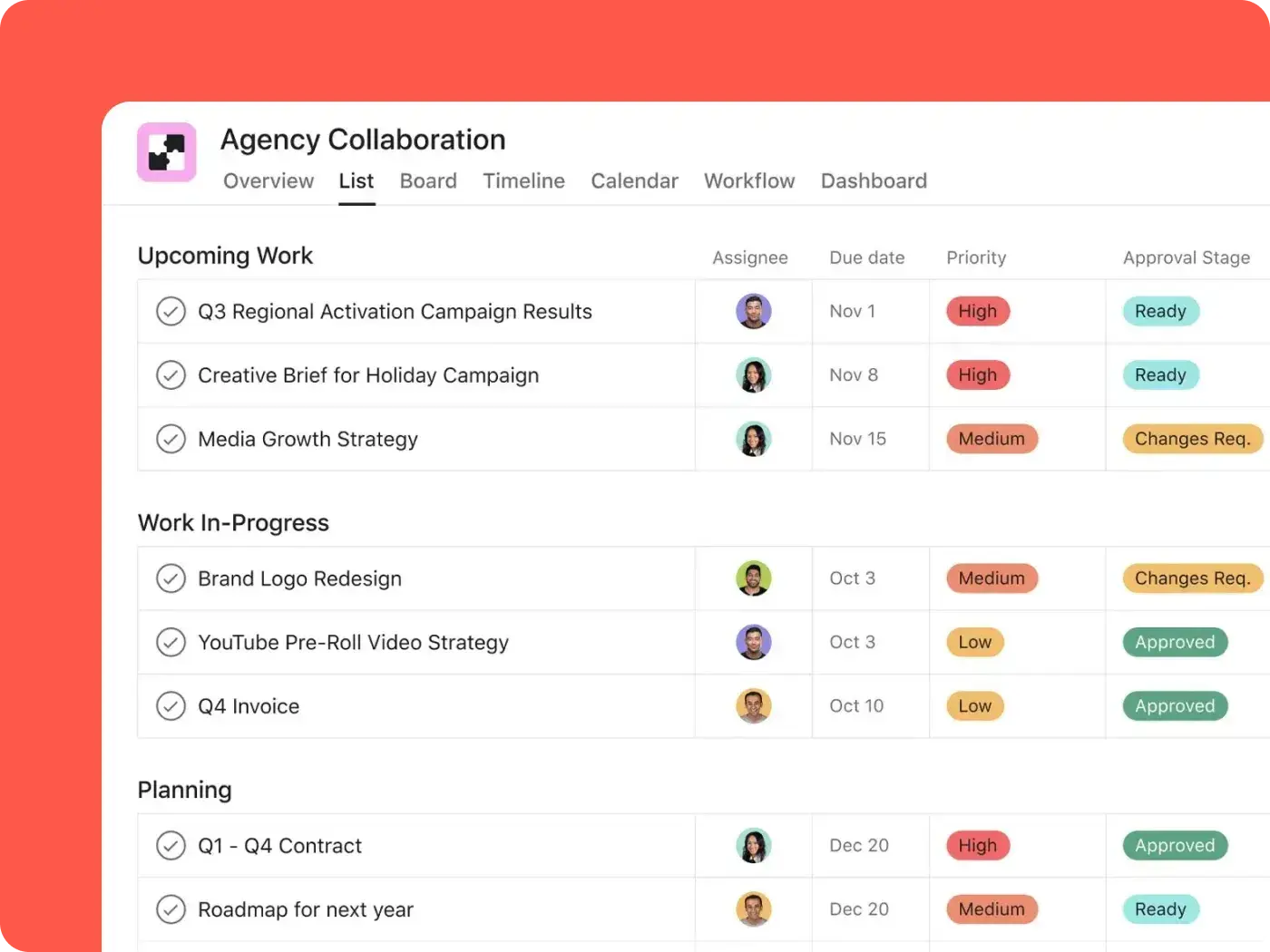
Get every task into one list, with an owner and a due date
Turn a request from a meeting or message into an Asana task, then add an owner, due date, files, and comments to keep the details with the work. Use subtasks to track each step of a larger assignment. Use time tracking to record expected and actual time when effort matters. In My Tasks, each teammate can see their assignments across projects.

Make priority and ownership visible, not assumed
The assignee is visible on each task, and custom fields let your team mark priority or request type and sort work accordingly. When two departments need to track the same assignment, multi-homing lets you place that task in both projects without making separate copies. An update in one project appears in the other, so everyone sees the same owner, details, and progress.

See where work stands without asking
As a task management system, Asana lets your team see upcoming work in List, Board, Calendar, or Timeline project views. Dependencies show when a task is waiting on another, making blockers easier to spot before a deadline arrives. For a broader picture, status updates bring progress and changes together for stakeholders. Managers can check what’s due and what’s held up without collecting a round of individual updates.

Automate the parts of task management nobody should be doing by hand
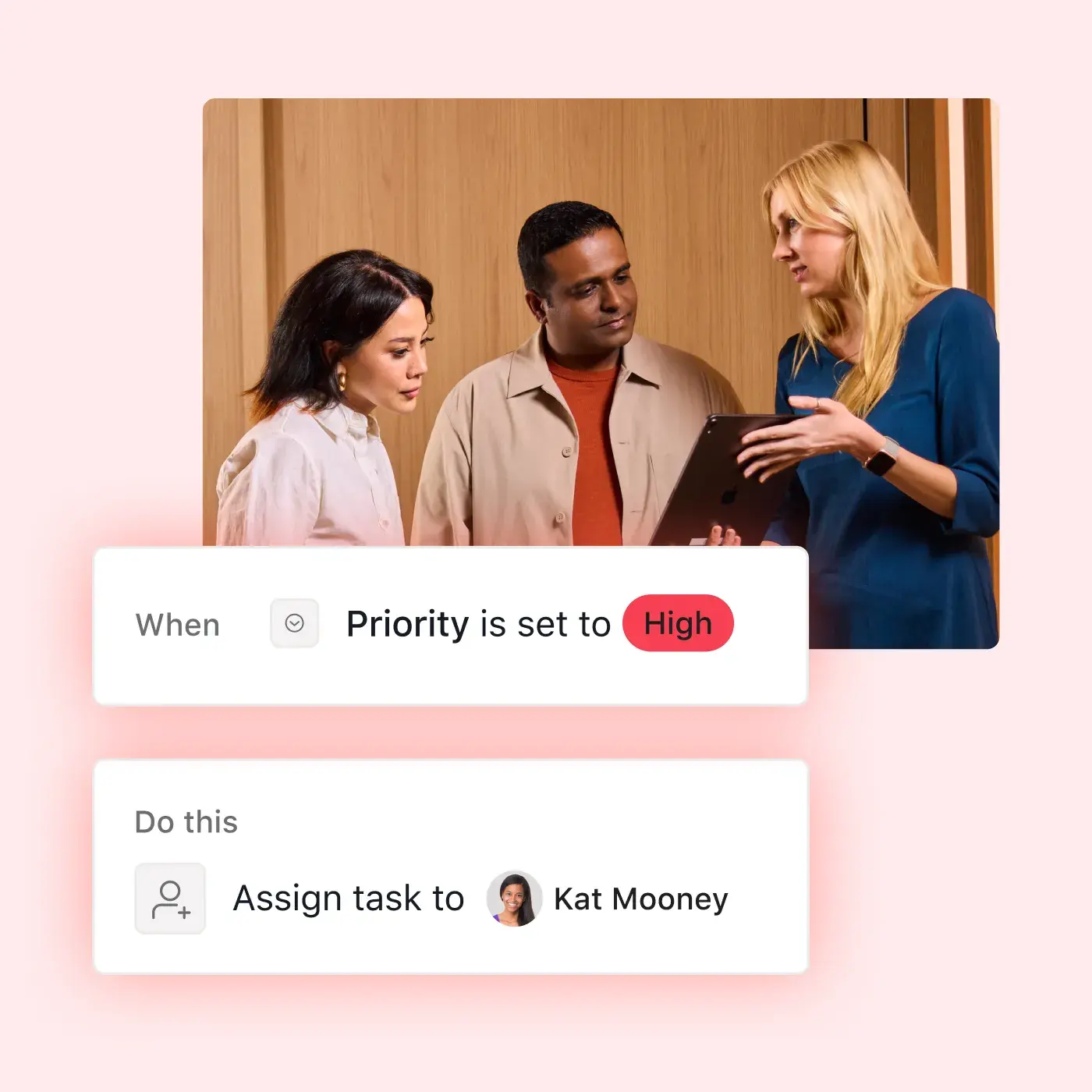
Rules let you assign tasks or notify teammates when work reaches a new stage. Workflow Builder helps teams set up those handoffs, while custom templates preserve the steps for processes they run repeatedly. Recurring tasks keep routine work on the calendar, and together these features make Asana a task management tool that adapts to how your team actually works. For processes that span multiple teams, explore how Asana supports workflow management.

Built for the teams that assign, track, and finish work together




Assign work effectively
Handing out work all day and tracking it becomes a second job. Asana provides managers with task delegation software that records an owner and due date for every assignment, while each teammate sees their work in My Tasks. As employee task management software, Asana gives managers one place to see who owns what and watch it move, instead of asking about it.
Blackboard status updates take just 15 minutes with Asana
Blackboard’s UX design team previously tracked requests across several tools, making it hard to see priorities and gather updates. After bringing requests into Asana, the team reduced the effort needed for updates and quantified their work, so they know where they’re overallocated and where to improve resourcing.


My monthly status update used to take me an hour or two, and now it takes just 15 minutes. Asana Portfolios has decreased the amount of bespoke updating we do.Joannie Wu
Design Manager, Blackboard
Put your team’s tasks in one place
Every week used to start with a round of “Where are we on this?” messages. With Asana, you can open your team’s task list and see what’s due, who owns it, and what needs attention. Teammates can update their work in the same place. When someone asks for a status update, the answer is already there.
常見問答集
任務管理是一套組織、安排優先順序並追蹤任務的流程,以確保任務能有效率地如期完成。 其核心是指派任務、將專案拆分成較小的片段,並確保設定期限,以便所有事項均能向前推展。
但任務管理不僅僅是保持井然有序,更關乎保持領先。 無論您是管理團隊的任務,還是經營小型企業,這都是將宏大構想轉化為可行動步驟的關鍵。 藉助子任務、任務清單和範本等工具,即使是最複雜的專案也能輕鬆處理。 透過定期監控任務進度,您可確保每項投入量都與您的目標一致,從而幫助您更聰明地工作,而非更努力地工作。
Task management software is a shared tool for recording the work a team needs to do and following its progress through completion. It replaces scattered to-do lists and spreadsheets that leave people unsure which assignments are current. With Asana, teams can keep task details and updates together so everyone can see who is responsible and what comes next.
最佳任務管理軟體可協助個人和團隊有效地規劃、組織並完成任務。 透過將工作集中到單一工作空間,您可以簡化任務指派、設定優先順序並追蹤進度,同時讓每個人維持資訊同步。
任務管理工具不僅僅是基本的組織。 藉助工作流程看板、甘特圖和行事曆檢視等功能,您可以即時將時間軸、工作流程和專案藍圖可視化。 而進階協作功能則可實現團隊合作,讓團隊成員彼此聯繫並分享更新。 任務管理應用程式透過動態視覺化工具和內建指標,將資料轉化為可據以行動的深入解析。
Look for task tracking tools that give your team one place to capture work, a clear owner and due date for each task, useful project views, and automation for repeatable steps. Asana brings all those capabilities together, so teammates can track assignments and managers can see progress. For a fuller comparison of options, see our guide to the best task management software.
您的任務管理工具應具備管理和執行工作所需的一切。 確保您選擇的任務管理軟體將您的待辦事項彙總在一個檢視中,即包括專案和專案集層級。 您還需要找到一種工具,透過與您最喜愛的 Business 版應用程式整合,讓您可以靈活地按照自己的方式執行工作。 最後值得一提的是,請確保您選擇的任務管理軟體能夠提供規則、範本等可以將您的工作流程自動化的功能。 您還可以比較 Asana 和 Todoist ,瞭解其任務管理功能的差異。
跨專案歸屬是 Asana 任務管理軟體中的強大功能,可讓單一任務同時存在於多個專案中。 您最重要的工作需要與其他部門的團隊成員合作完成,而他們每個人都有自己保管和組織待辦事項的方式。 運用跨專案歸屬功能,您就可以在多個專案中放置相同的任務 (而無需建立多個任務副本,因為這樣的任務很快過時失效)。 然後,若您變更其中一個專案中的任一任務詳細資料,這些變更也會立即自動即時反映在其他專案中。
子任務是較大任務中較小型、可行動的部分,旨在將工作分解為可管理的步驟。 藉助子任務,您可以將特定責任指派給指派對象、追蹤每個詳細資料,並改善工作流程的整體功能。
例如,在敏捷架構中,「功能開發」任務可能會分成子任務,例如撰寫使用者故事、編碼、測試和部署,所有這些子任務都與特定的衝刺週期保持一致。 這些子任務是針對專案的使用案例量身打造,可簡化任務追蹤,並使一切與大局保持一致。 透過將子任務整合至任務管理軟體,團隊就能維持條理、有效協作,並以更有效率的方式達成目標。
Asana 是一款任務追蹤工具,可協助團隊建立任務、指派所有者、設定截止日期,並將日常工作連結至更大的專案排程。 團隊可以將 Asana 用作共用的待辦清單,然後新增每個任務所需的詳細資料,例如優先順序、相依性、專案階段、檔案、評論和核准步驟。
針對團隊專案,Asana 能幫助經理委派工作、排定週期性任務,並隨優先順序的變更分享狀態更新。 團隊還可以使用自訂欄位來追蹤問題、阻礙、發佈日期、預算、請求類型或資源管理詳細資料。
Asana 也支援更大型的工作流程,可將任務追蹤連結至其他類型的工作:
文件管理:附加檔案、新增評論,並將任務相關詳細資料與其支援的工作一同保存。
計劃管理:在共享工作空間中追蹤相關專案、里程碑、相依性和狀態更新。
資源管理:在指派新工作之前,審查所有者、截止日期、優先順序和工作負荷詳細資料。
藉助工作流程自動化,Asana 可以傳送請求、指派任務、更新欄位,並在工作進入下一步時通知隊友。 團隊可以快速查看哪些事項即將截止、誰是所有者、哪些事項遭到阻擋,以及接下來需要注意的事項。
You set up your first shared task list in a day by creating a project and assigning owners and due dates. You can start with a simple list and add more detail as your team uses it. For repeatable work, a task management template provides a starting structure so you don’t have to build every process from scratch.