


What is workflow management?
A workflow is the process of how you get stuff done. It’s a system that makes work more efficient while keeping everyone on the same page. Workflow management is all about building and tracking these processes. Asana is like a home base for all your workflows: use it as a tool to create workflows and track your team’s work. Here are some examples of common workflows:
Examples of team workflows

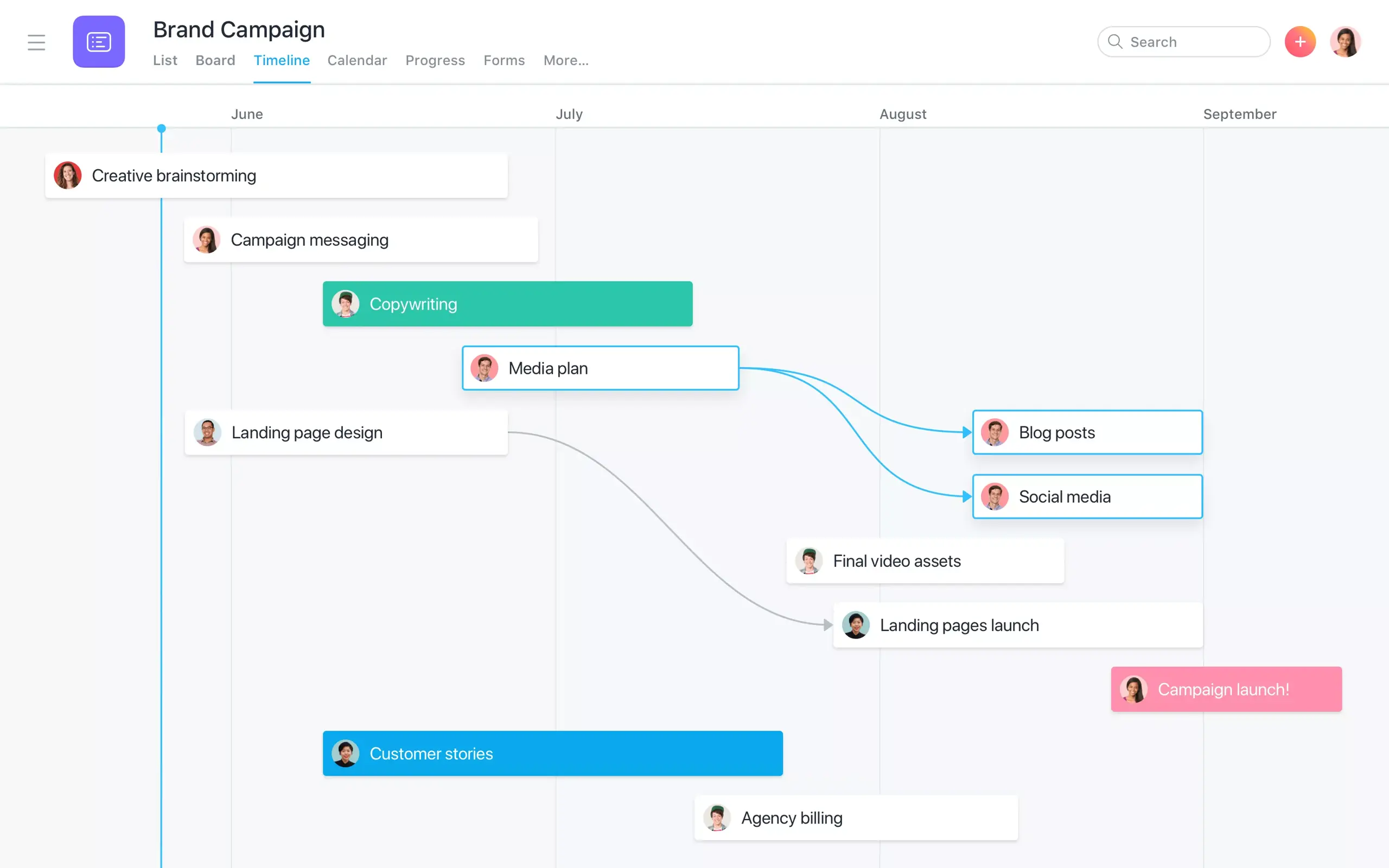

Manage and review any incoming request, from creative assets to bug fixes, and assign them out to members on your team.
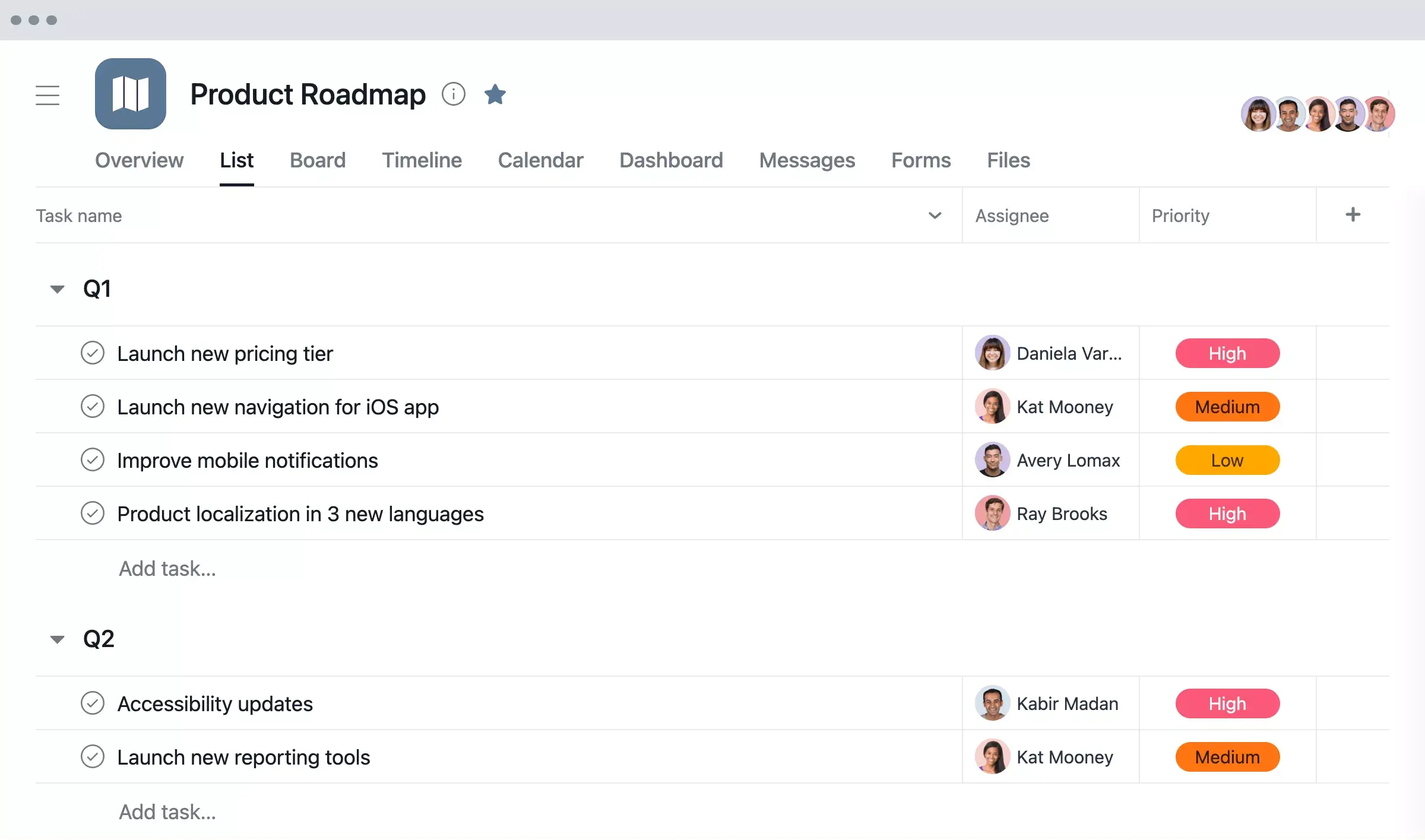
Make product roadmapping easy with a simple list view that allows your team to prioritize work, document backlogs, and more.
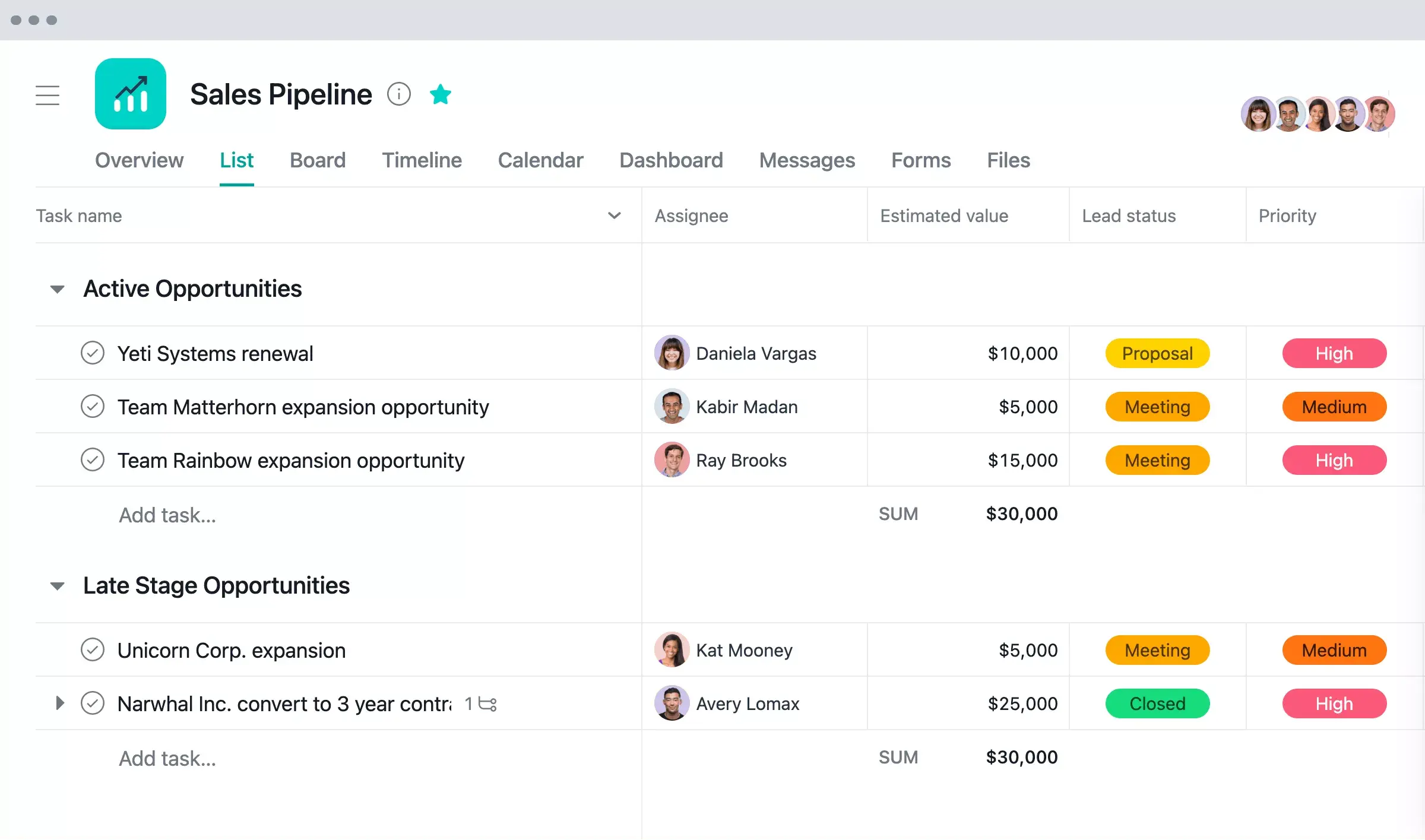
With integrations like Salesforce, you can streamline your favorite business tools and customize your sales pipeline in different views like a list, calendar, or timeline.
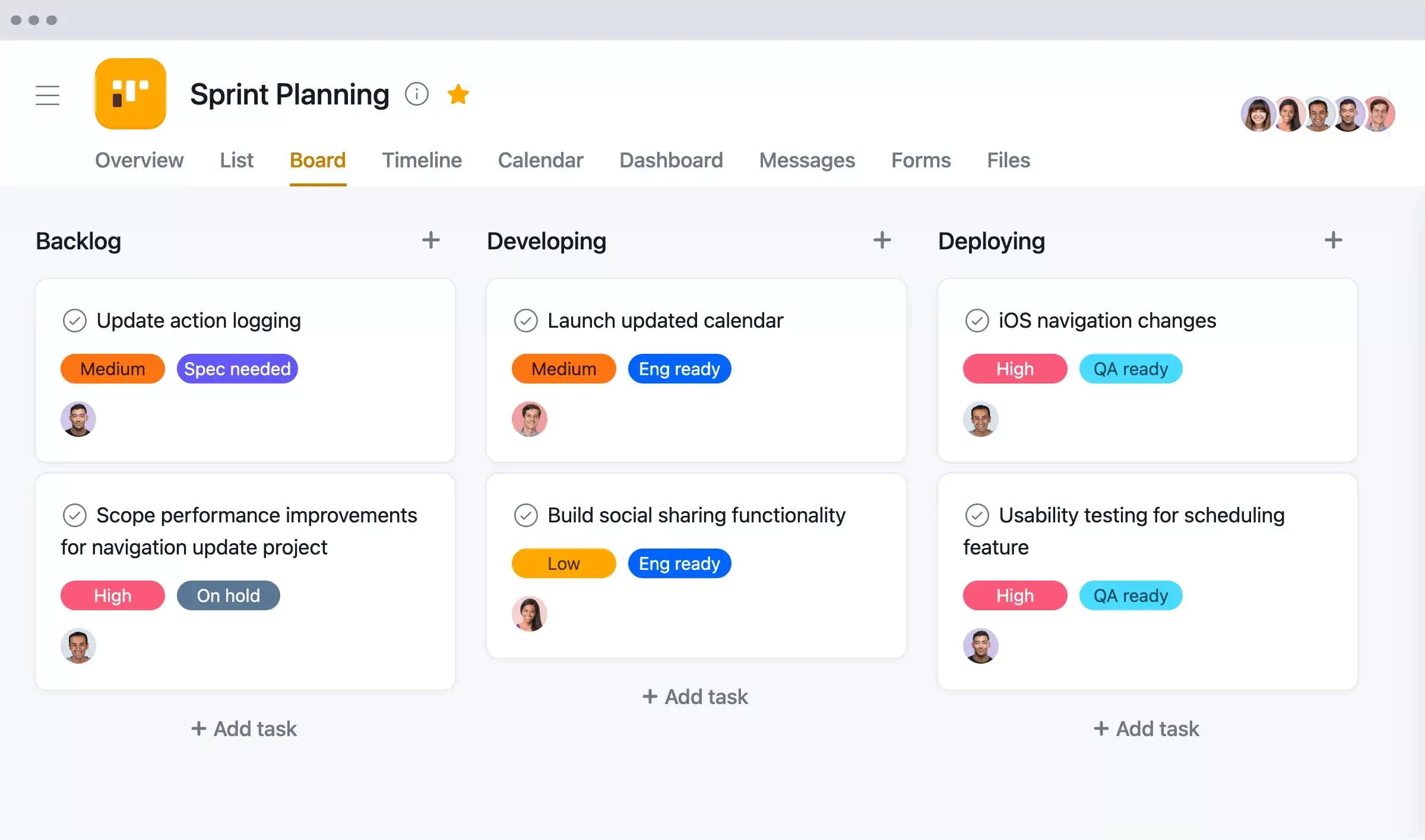
Go beyond the list view with drag-and-drop kanban boards that help your product and engineering teams prioritize work and manage capacity with sprint planning.
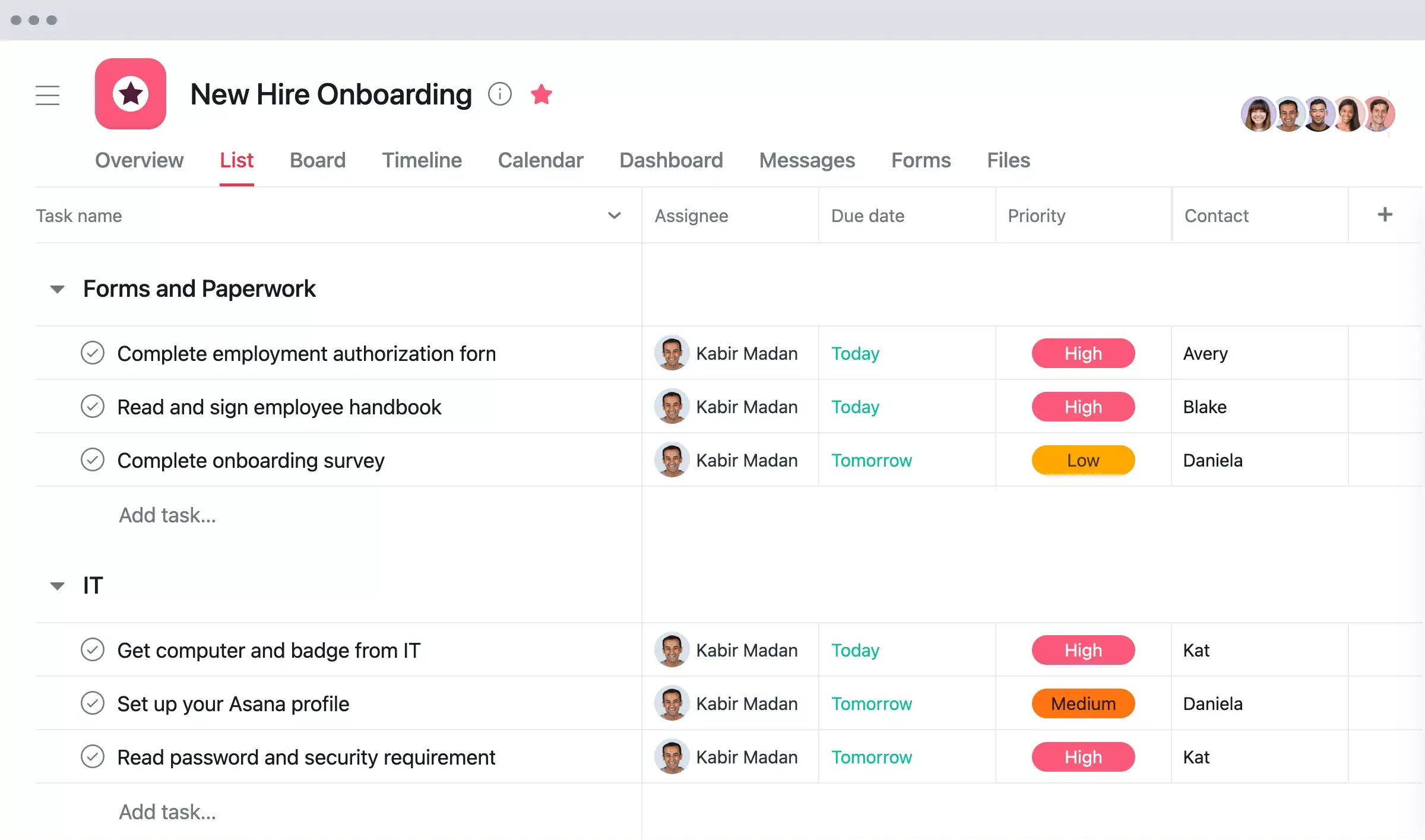
Save time by streamlining common managerial processes like employee onboarding with the help of workflow templates.
Using Asana as your workflow management software
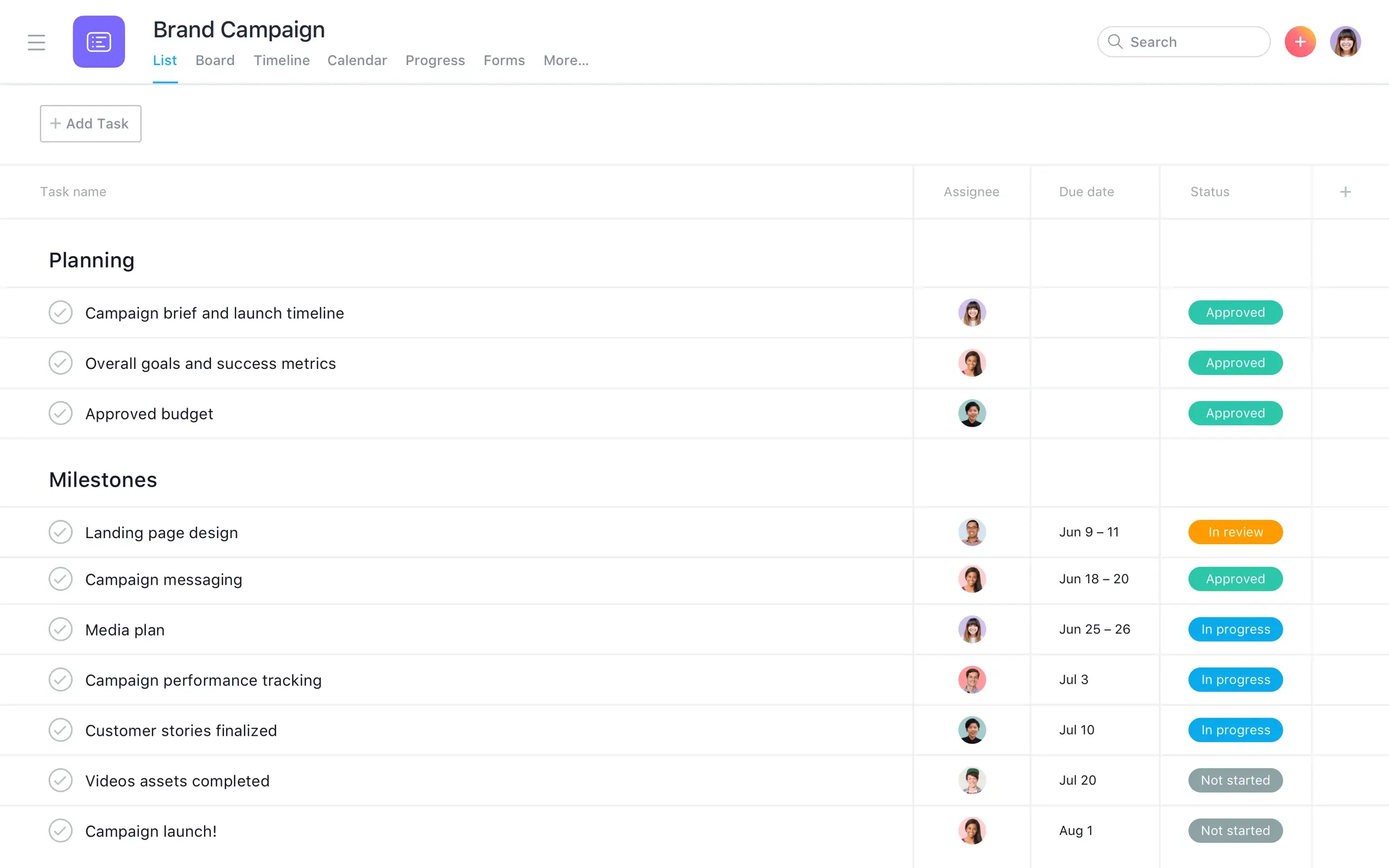
Customize workflows to fit your team and company’s needs-so everyone tackles the right tasks at the right time.
Tips for establishing great workflow management
Decide how and when to communicate
To make sure everyone’s on the same page, set communication guidelines in advance, give everyone clarity on higher level goals, and encourage team collaboration.
Streamline the things you do regularly
From daily task management to approval processes, think about all the places where you can save time on recurring work and repetitive tasks with workflow automation.
Create a customizable internal knowledge base
Make document management easy for collaborators to access information by creating a user friendly central database of resources.
Define responsibilities and expectations at the start
To avoid bottlenecks, be sure to answer these questions for any custom workflow: What are the exact deliverables? Who’s responsible for each piece of work? When is each task due?
Keep your workflow simple and make real time adjustments
Avoid creating overly complex workflows. To start, keep it simple and check in regularly with your stakeholders to make any necessary adjustments.
Include a step for goal setting in your team's workflow
Goal setting helps team members understand how their work supports company objectives and business processes.
Make the most of workflow software

Tasks
Easily create tasks for yourself or assign one to a teammate.

Sections
Sections let you customize Asana to match your workflows and add structure to any project.

Project views
View your tasks in List, Board, Calendar, or Timeline view.

Start and due dates
Assign deadlines to ensure every task gets completed on time.

Messages
Discuss a project’s progress to get on the same page and keep the momentum going.

Task assignees
Give tasks a clear owner, so everyone knows who’s responsible.
Teams trust Asana to help achieve their goals








Still have questions? We have answers.
A basic workflow is a sequence of steps designed to complete a specific task or process. It outlines how tasks are initiated, who is responsible, and how the process progresses from start to finish. For example, in employee onboarding, the workflow might include creating an account, assigning training, and scheduling an introductory meeting. This simple structure helps streamline tasks and reduce redundancies.
The key components of a workflow include:
Tasks or steps: The individual actions that need to be completed.
Sequence of steps: The order in which tasks are performed.
Stakeholders: The people or systems responsible for each step.
Conditions: Rules or triggers that determine how the workflow steps proceed.
Tools or software: Systems like workflow management software or tools such as Slack and Gantt charts to organize and monitor progress.
The definition of a workflow varies depending on the industry. In healthcare, workflows may focus on patient intake and treatment coordination, using tools like real-time notifications and digital workflows. In software development, workflows are typically about managing repetitive tasks and fostering team collaboration through integrations with project workflow tools. While workflows differ in their details, they all aim to optimize efficiency and eliminate bottlenecks.
Yes, there are examples of workflows as common uses include sprint planning, campaign management, pipelines, and product launches.
Transform the way you work with Asana
Start your free trial
Try Asana for free. No credit card required.
Watch the demo
See how Asana connects companies at scale.
Speak with a sales rep
Learn how Asana helps teams collaborate seamlessly.