


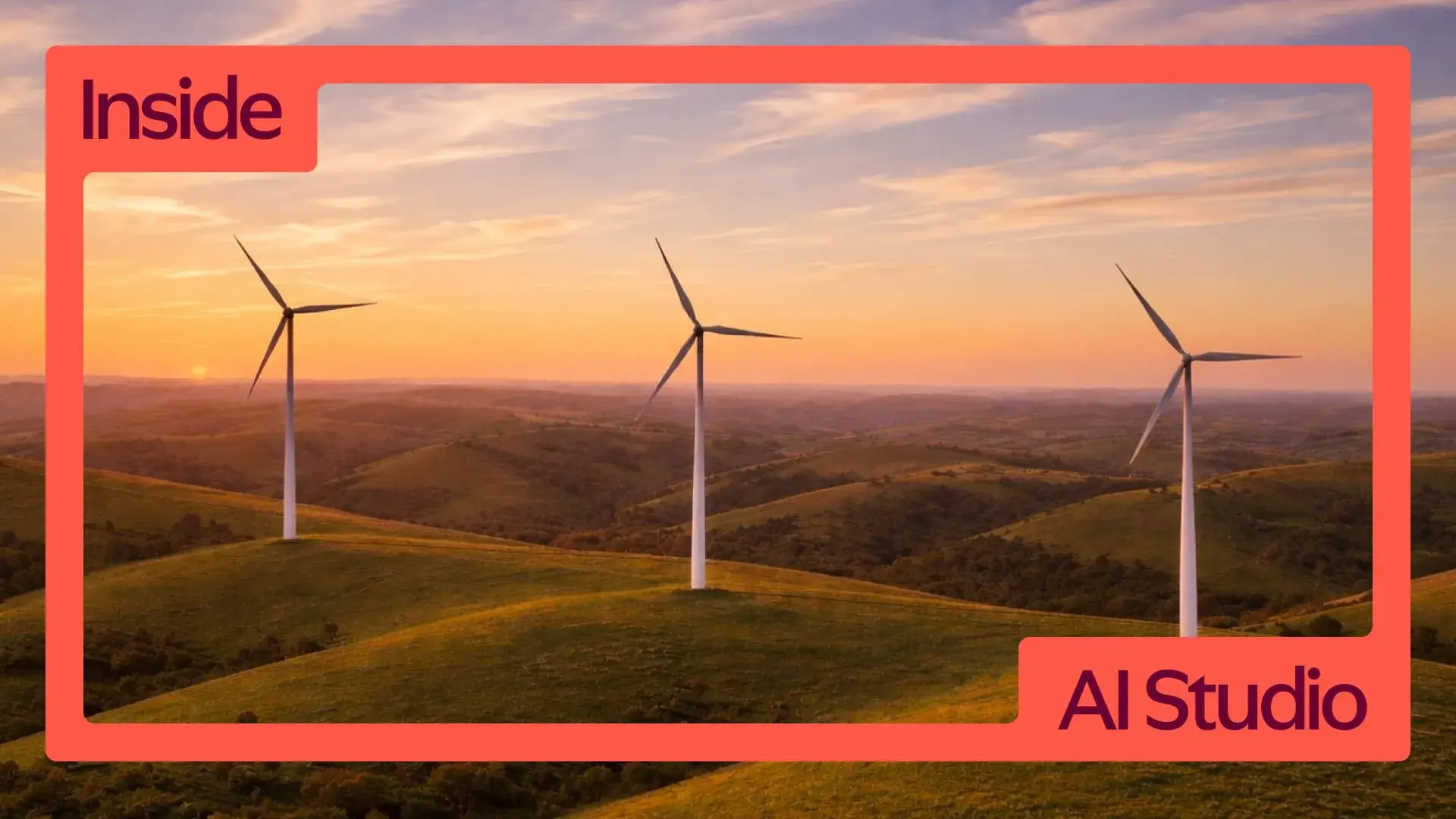
How E.ON Next builds the foundation for AI-driven strategy with Asana AI Studio

85% of Fortune 100 companies choose Asana¹



Many households and businesses are ready to transition to the renewable-powered energy grid but need guidance on where to begin. E.ON Next, a leading energy supplier in the UK, is stepping in to demystify this new energy landscape. They provide accessible solutions that help consumers save money, including renewable electricity, solar panels, batteries, heat pumps, and EV chargers.
To maintain the pace of innovation, E.ON Next’s Go-to-Market (GTM) team recognised the need for internal processes that are just as efficient as the company’s products. That’s why they turned to AI Studio to tackle their most information-heavy and time-consuming workflows. Instead of relying on slow, manual steps, employees are now freed to focus on strategic work while AI handles advanced coordination.
“This isn't just about saving time with simple task automation; it's about creating a scalable, intelligent way to access our own data,” said David Hepburn, Copywriter and AI Lead for Internal Creative Agency at E.ON Next. “AI in Asana empowers our teams to make better-informed decisions.”
Collaborative AI Teammates are here
Learn how AI Teammates deliver outcomes with the right context, checkpoints, and controls.
Simplifying work requests and triage in a snap
Across the GTM department, managing incoming work requests was a time-consuming, multi-step process that created significant bottlenecks. The team collected initial details from submitters, and producers then had to manually assemble project briefs from scratch. This often created a back-and-forth loop to clarify basic details before the real work could begin, lengthening the request process and pushing back production timelines. The result was a painful delay between when a request was submitted and when the team could begin work.
This manual data collation cost E.ON Next approximately £6,000 per month in producer time alone. Martin Fourie, Consultant to E.ON Next, shared that to continue growing, teams needed a solution that made it easy to request work—and even easier to get started.
Asana AI Studio enabled automation of triage tasks that producers previously managed, including revision submissions and assembling the first version of the brief. Through experimentation, the GTM team learned that strong, well-structured prompts gave the AI the clarity it needed to generate reliable first drafts, enabling it to confidently automate the coordination steps that had slowed producers.
The shift from manual to AI-led triage has been dramatic. This first use case for GTM triggering has saved an estimated £5.5K monthly. E.ON Next anticipates significant savings after teams incorporate AI Studio into other processes as well. Here’s a look at how intake and triage work now.
Step 1: Colleagues submit a straightforward work request
All incoming work is submitted via a structured intake form that captures the details needed to generate the first draft of the brief. The GTM team tailored the form to collect the essential information for each request type, keeping it simple enough for submitters to complete quickly while still giving the AI the context it needs to produce a clear, accurate starting brief.
Step 2: AI generates the brief
Once the form is submitted, an AI agent immediately reviews the inputs and compares the input with an example of a good submission. It serves as the first line of triage, identifying areas where the submission lacks detail and contacting the submitter to clarify them. It performs this clarification and elaboration loop until the original submission, together with the subsequent information, form a comprehensive picture.
Once the AI is satisfied with the data quality, it synthesises the information to generate a comprehensive initial brief. This AI step eliminates the manual back-and-forth producers previously handled, saving them hours.
Turning lessons learned into lessons shared
For any project team, capturing "lessons learned" is often a tick-box exercise—valuable insights are written down, filed away, and rarely looked at again. Teams across E.ON Next wanted to change that dynamic. Their goal was to streamline how knowledge is captured and, more importantly, how it is discovered by future teams organisation-wide.
Using AI Studio, E.ON Next built a centralised hub that not only stores information but also helps project managers find it. By automating the tagging and summarisation process, employees turned a static archive into a dynamic resource for the whole company.
Take a look inside the new knowledge hub.
Step 1: Submitters share new insights or search the database through a simple workflow
The workflow begins with a smart intake form that offers two options: Submit a new lesson from a recently completed project or Search for existing insights. Because this workflow handles both submission and search in a single place, users no longer have to switch between tools or projects to find what they need.
Step 2: AI instantly tags and summarises each submission
After a new lesson is submitted, the AI instantly goes to work. It analyses the content, generating a concise summary of the lesson so it’s easy to scan later. At the same time, the AI automatically tags and filters the submission by project type or specific keywords. This step guarantees that the submission lands in the right category without manual sorting.
Step 3: Employees find insights in seconds
Employees can use the knowledge base to quickly find insights relevant to their current work or contribute new lessons. Instead of searching through old folders and files, the AI-organised structure allows the wider business to request access and surface critical learnings in seconds.
Streamlining governance and prioritisation
For the Project Management Office (PMO), prioritising the right work is just as important as doing the work. The PMO teams currently track between 40 and 50 strategic initiatives. Before adopting AI Studio, teams relied on complex Excel sheets to calculate value and align projects to company pillars. While this data was eventually moved to Microsoft Power BI for visibility, compiling it into "pre-read" materials for stakeholders was manual and time-consuming.
With AI Studio, E.ON Next is shifting this burden from the PMO team to AI Studio. Here’s how teams use AI to streamline their governance process.
Step 1: AI drafts board-ready stakeholder summaries
Preparing pre-read materials used to require manually summarising the status of dozens of initiatives. Now, AI instantly generates concise overviews of every initiative. The AI pulls the latest status updates and key metrics—including value calculations and alignment to strategic pillars—creating a consistent, board-ready summary ready for review.
Step 2: AI analyses strategic goal alignment
Instead of relying on spreadsheet formulas to check if a project aligns with company priorities, the AI analyses the initiative's data to provide a clear overview of its strategic value. This step ensures that every project currently in flight is directly aligned with the company's broader goals.
Step 3: Stakeholders make informed decisions based on data
By automating the data gathering and summarisation, the governance process becomes significantly faster. Stakeholders enter prioritisation meetings with clear AI-generated insights already in hand, allowing the conversation to focus on decision-making rather than clarifying status.

The standout positive for me is that AI Studio can take minimal prompting and guidance and extrapolate it well. It doesn’t require much upfront work or time to start delivering valuable results.”
Building a future-ready digital workforce
Looking ahead, E.ON Next’s AI Forum and Centre of Excellence is exploring how to move beyond simple automation to build a true digital workforce. The ultimate goal isn't just internal efficiency—it’s to empower the organisation to better serve the renewable-powered energy grid. By trusting AI to handle coordination and reporting, E.ON Next frees up its teams to deliver the accessible, sustainable solutions that help its customers save money.
Collaborative AI Teammates are here
Learn how AI Teammates deliver outcomes with the right context, checkpoints, and controls.


